Movement basics
Facing-wall slides use the wall as a guide while the arms move upwards. Comfortable range matters more than reaching a marked height.
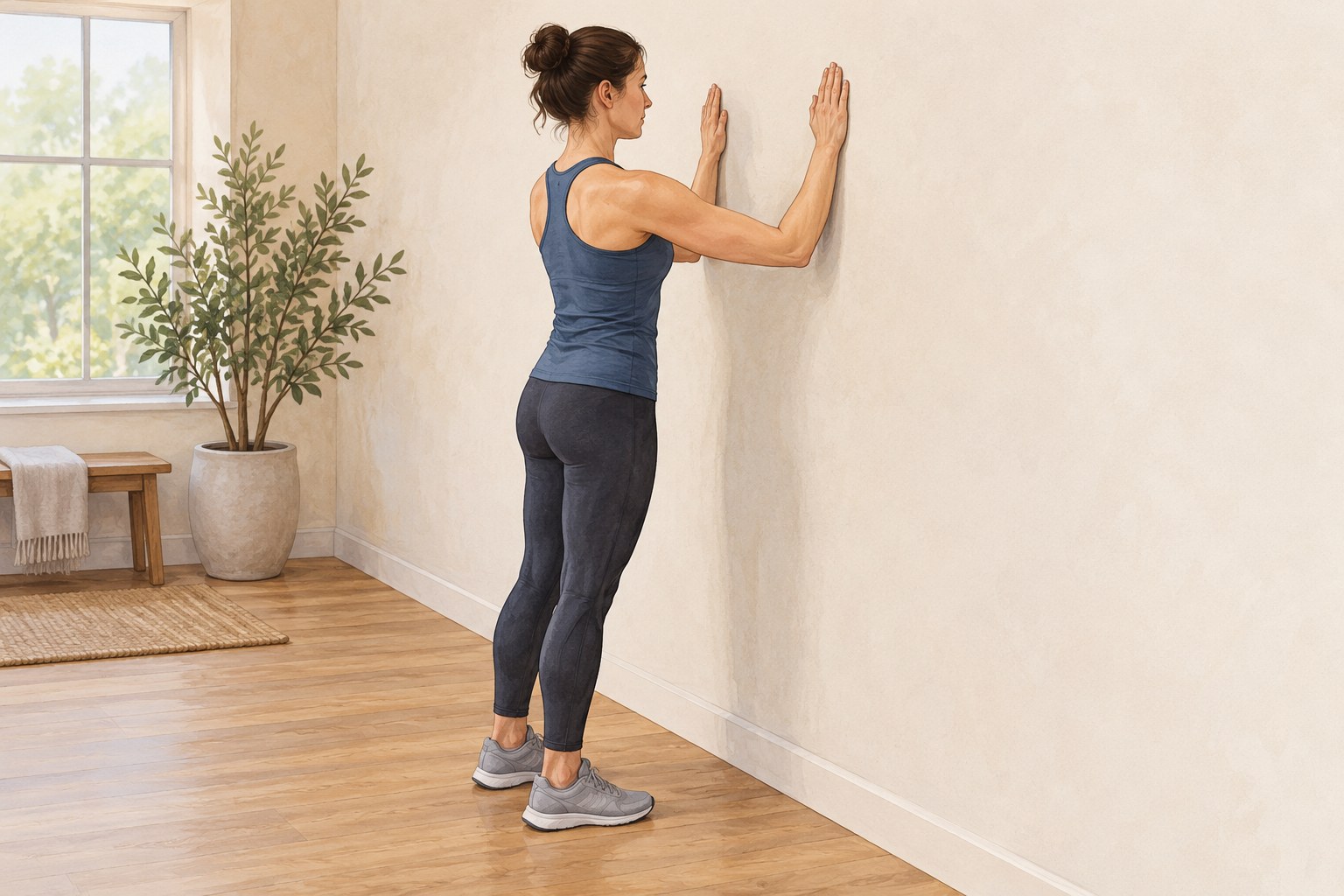
Choose a clear, solid wall with no rough patches, picture hooks or shelves in the movement path. Stand close enough to place the hands or forearms on it without leaning your whole weight forwards. Keep the feet stable and the floor dry. This is not a wall press-up, so do not turn the setup into a large supported body lean.
The exact hand and forearm contact should follow the version shown by an instructor. Some versions use a cloth to reduce friction; if you use one, make sure it does not cause an unexpected slip or encourage you to push hard into the wall. The contact is a guide, not something to force.
Move the hands upwards slowly, allowing the elbows to extend as appropriate, then bring them down under control. Stop the upward movement before you need to arch the back strongly, rise onto the toes or shrug excessively to gain height. A short slide can be a complete practice repetition.
Keep the chest and pelvis in a comfortable position rather than pressing them towards the wall. Do not compare the endpoint with another person's reach: arm length, starting distance and the version being practised all influence what you see.
Leave resistance bands and weights out of the first attempts. They change the task and can make it harder to notice whether the basic movement is comfortable. If the wall contact is awkward, ask for a demonstration rather than twisting the wrists into a position that merely resembles a photograph.
A small number of calm repetitions can be enough to understand the movement. Rest between attempts if the shoulders become tense. Breathing should continue normally; holding the breath to reach a little higher is a sign to make the task smaller.
Wall slides are also used in some rehabilitation programmes, but that does not make a general version a treatment for shoulder pain. If you have an injury, recent surgery or a prescribed exercise plan, follow the clinician's instructions about range and timing.
Stop if the slide causes pain, tingling or instability. Do not push higher in the belief that stiffness must be broken through. For comfortable general practice, record the version and the cue that helped you move smoothly, rather than measuring success by the highest point your fingertips reached.