Movement basics
The hip hinge is a way of bending at the hips while the trunk moves with them. Learning it without a weight removes one handling task while you explore the pattern.
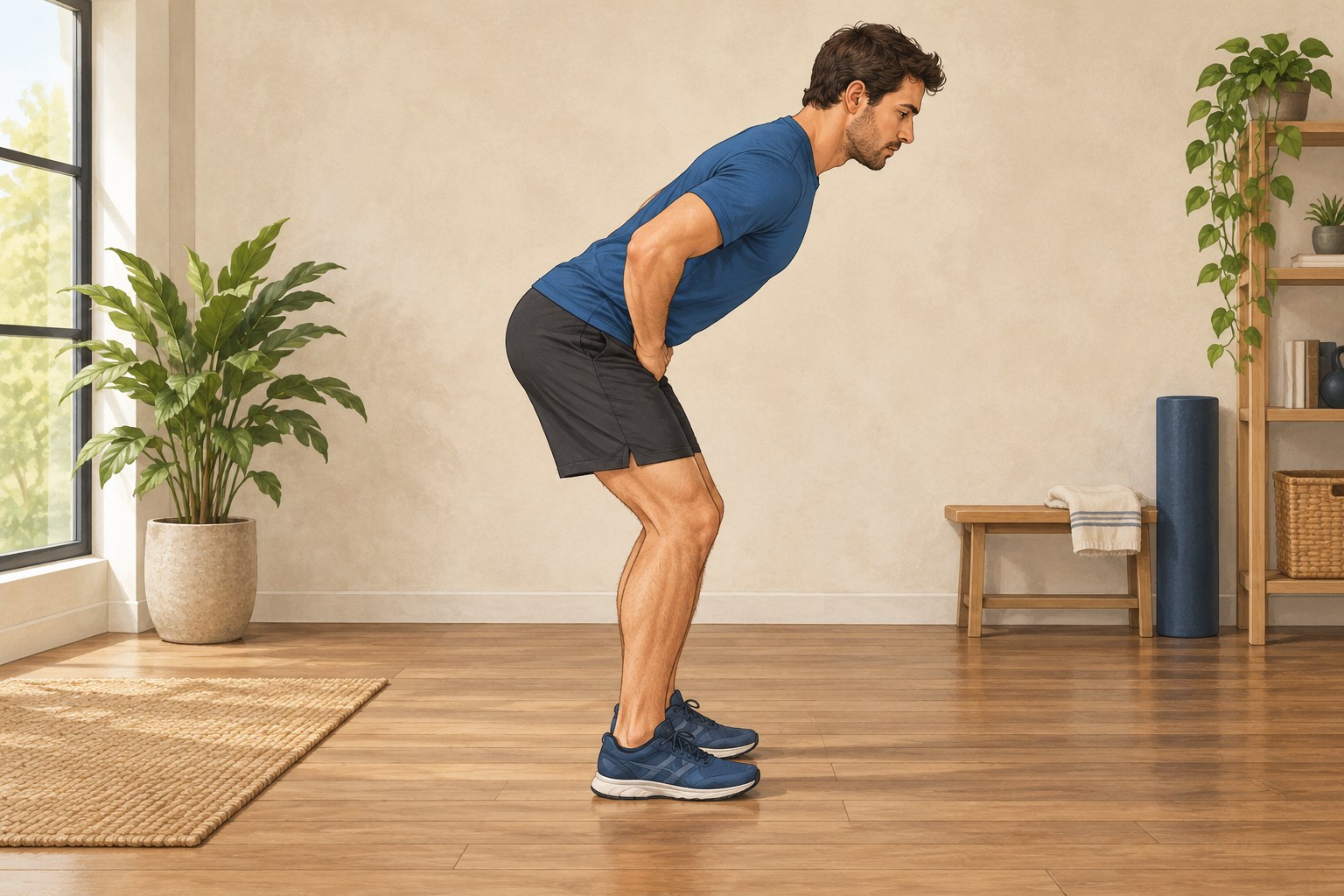
In a hinge, the hips move backwards and the torso inclines forwards, with some bend in the knees. A squat generally involves more knee bending and a greater lowering of the whole body. The two patterns can overlap, so you do not need to force a perfectly rigid distinction. The useful starting question is whether you can deliberately send the hips back without simply folding the upper back.
Stand on a clear, level surface with room behind you. Begin with your hands resting lightly at your hips and a comfortable stance. Keep the knees softly bent rather than locked. Make the first movement small enough that you can return to standing without shifting your feet or losing balance.
Move the hips backwards while allowing the torso to tip forward, then return to a comfortable upright position. Keep your neck in line with the trunk rather than lifting your chin to look across the room. There is no requirement to make the torso parallel with the floor or reach your hands to the ground.
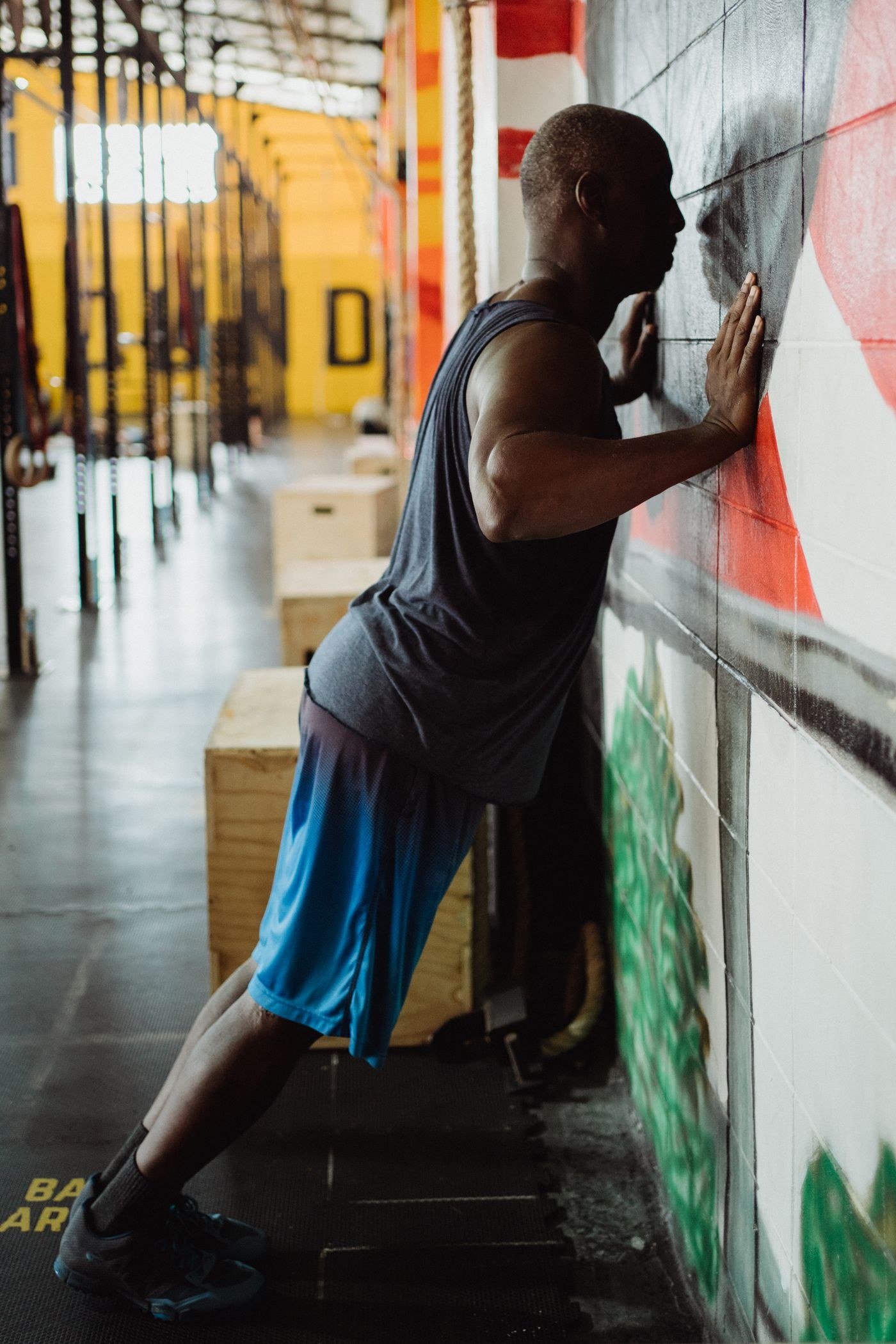
Some people find a nearby wall behind them useful as a reference for the backwards direction, provided they are not leaning against it or reaching so far that balance is lost. Ask an instructor to set that up if the idea is unclear. A reference is meant to clarify the movement, not make you achieve a fixed distance.
Avoid thrusting the hips forwards beyond an ordinary standing position at the finish. Completing the hinge does not require leaning backwards. Likewise, a strong stretch sensation is not the target. Use a range that feels manageable and stop if the movement produces pain or other concerning symptoms.
Once you can repeat the unloaded pattern, a coach may introduce a suitable light load. That adds questions about grip, where the weight travels and how it is picked up and put down. Do not jump straight from a bodyweight rehearsal to a fast kettlebell swing; the speed and equipment make that a different learning task.
For now, record the cue that made sense to you and practise it in the agreed amount. If every repetition feels different, more instruction may help more than more repetitions. A hinge can remain a short movement rehearsal within a warm-up without becoming a demanding workout on its own.