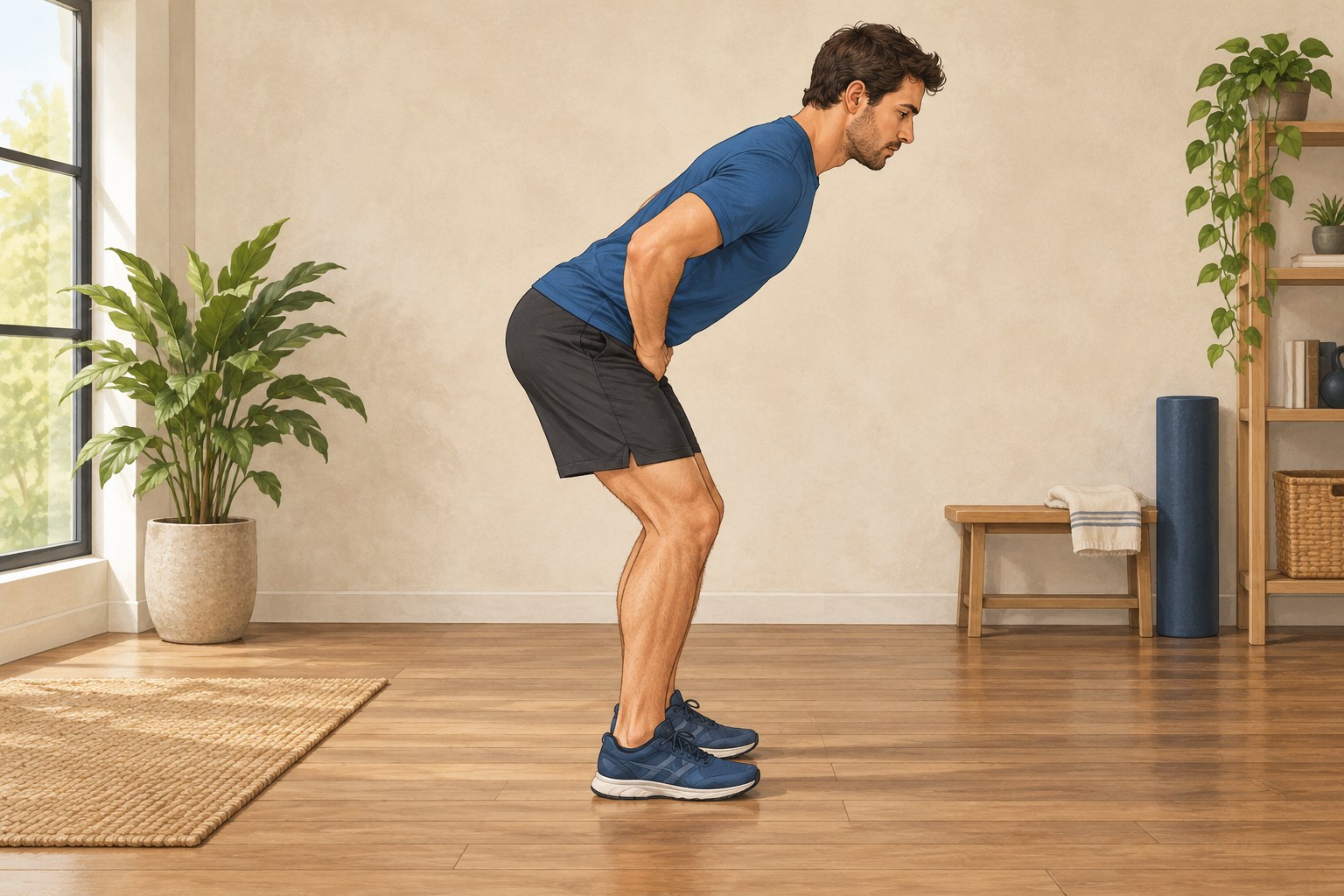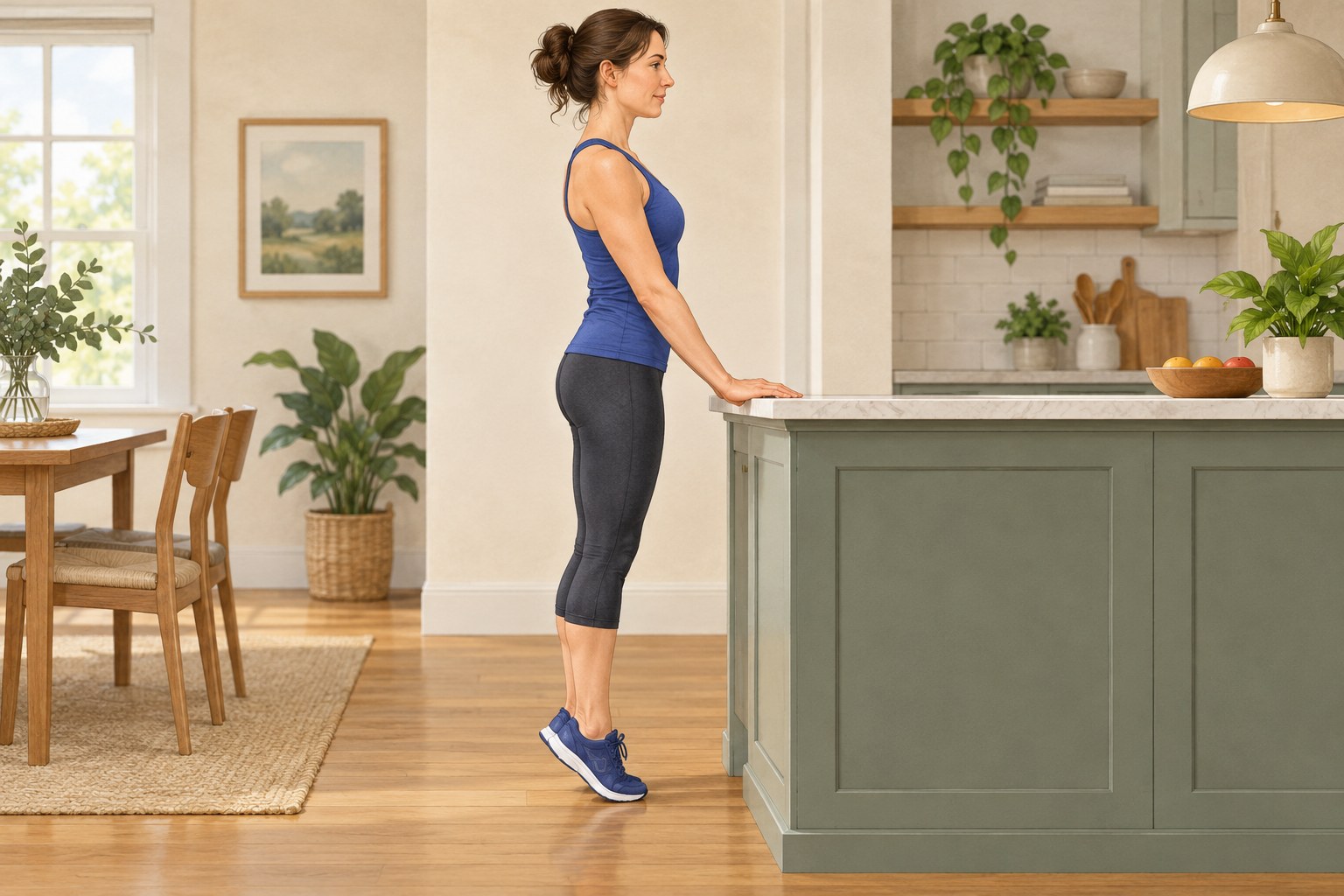
Movement basics
A chair gives sit-to-stand practice a clear destination. Its height and stability matter as much as the movement you perform above it.
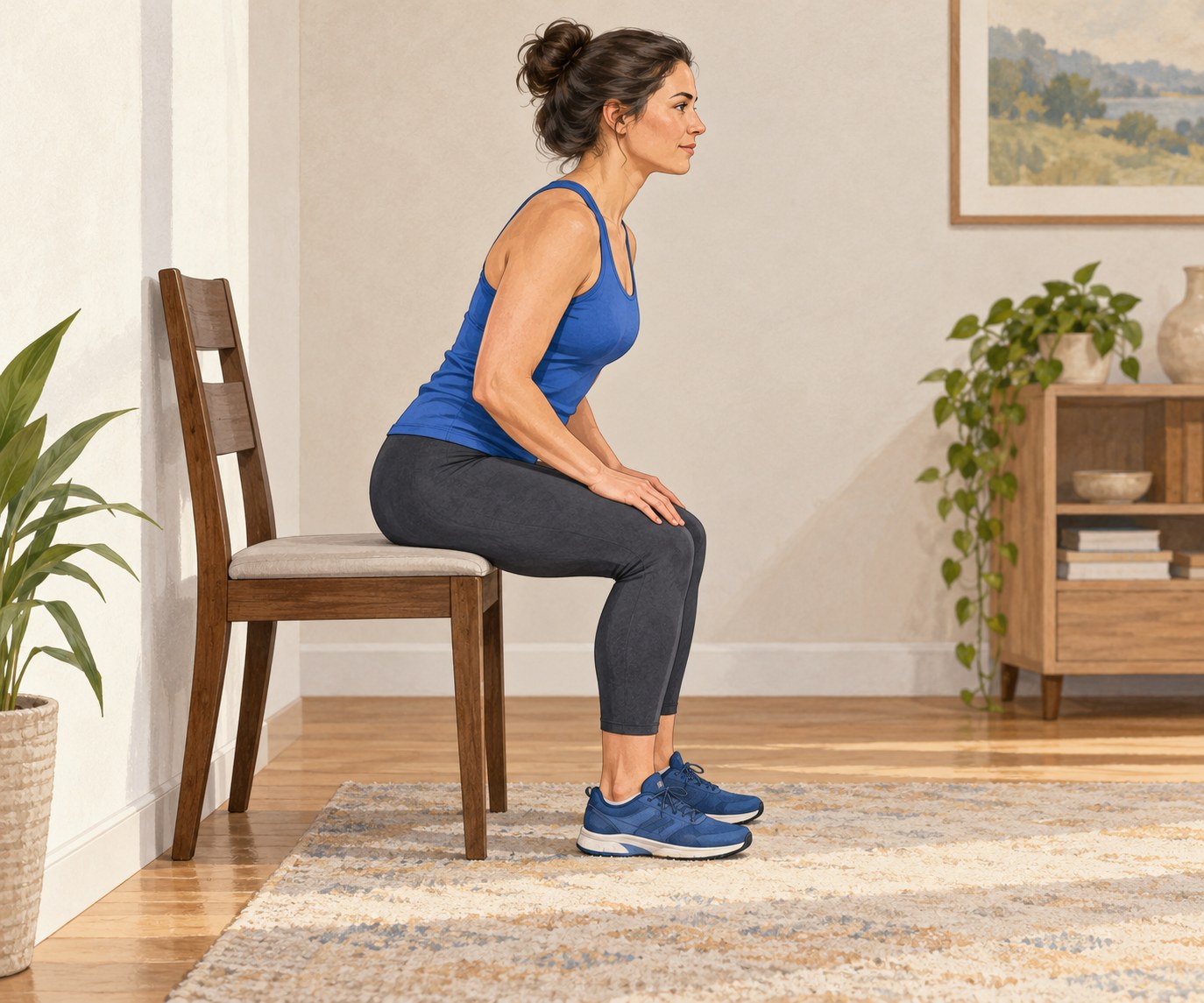
Use a solid chair that cannot roll, fold or slide on the floor. Check it with your hands before sitting, and clear bags or small objects from around the legs. A soft sofa is a different task: the cushion can compress and the seat may be much lower than expected. Start with a firm seat that lets your feet rest securely on the ground.
Sit near the front while keeping enough seat beneath you to feel secure. Position your feet so you can rise without having to drag them into place halfway through the movement. If the seat feels too low or standing requires a forceful rocking motion, ask an instructor about a more suitable height or a supported alternative. Do not create a taller seat with a loose pile of cushions.
Lean forward slightly from the hips and stand in a controlled way, then return slowly to the seat. Use appropriate hand support if that is part of the version agreed with your instructor. The aim is not to prove that you can avoid using your hands at any cost. Look ahead and give yourself time to settle before repeating.
Notice the landing. Dropping onto the chair can mean that the set has continued beyond your current control, or that the seat and setup need attention. Stop, reset and reduce the amount of work rather than bouncing straight into another repetition. A deliberate return is part of the exercise, not merely preparation for standing again.
Keep the chair and foot position consistent while learning. Otherwise, a different seat height may explain why one session feels harder than another. Record the chair or support you used if you are following a programme. This makes a small number of repetitions more informative than a large total performed from several different seats.
When the movement becomes familiar, discuss the next step with an instructor instead of immediately adding a weight. You may benefit from repeating the same version with steadier control. If rising causes pain, marked dizziness or a feeling of instability, stop and seek appropriate advice. Sit-to-stand practice is a general movement option, not a test that everyone must complete unaided.