Movement basics
A supported calf raise is a small movement with two equally important parts: lifting the heels and lowering them without dropping.
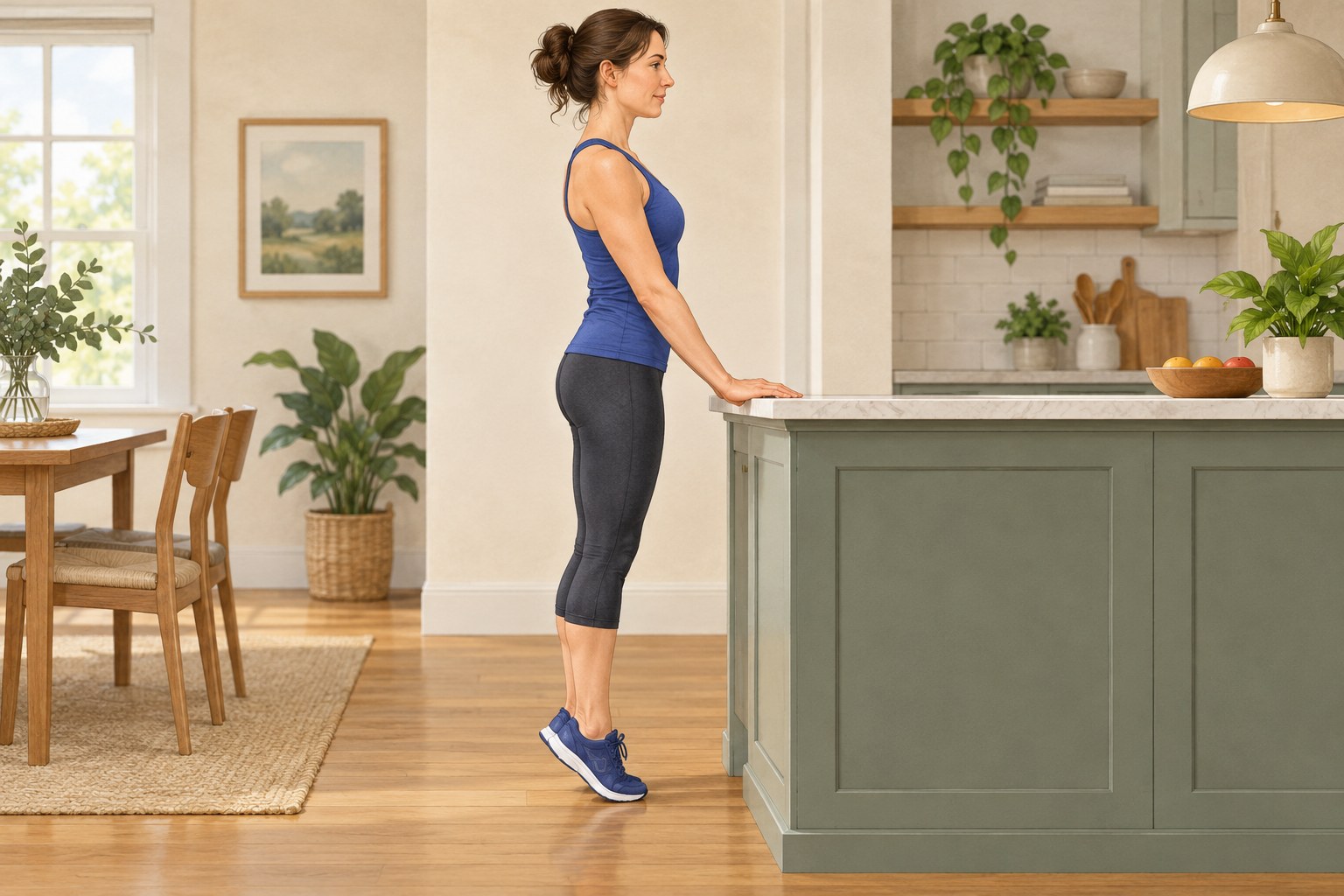
Stand beside or behind a fixed, sturdy support on a level floor. A kitchen counter can provide a more predictable contact than a lightweight chair, but check that the area is clear and dry. If using a chair, it must not slide or tip when you touch it. Keep the support close enough that you do not have to reach across empty space.
Begin with both feet on the floor in a comfortable stance. The support is there to steady you, not to pull your body upwards. If standing itself feels insecure, seek guidance on a suitable version rather than turning this into a balance challenge. Removing hand contact is not a compulsory progression.
Raise both heels a comfortable amount, pause briefly if you can remain steady, then lower them under control. Keep the motion vertical rather than rocking onto the outside edges of the feet. The height may be modest, especially while learning, and it does not need to match an illustration.
Listen to the landing. A heavy thud or a sudden drop suggests that the descent is no longer controlled. End the set, rest and begin again only if appropriate, rather than bouncing through the remaining repetitions. Keep breathing throughout and avoid gripping the support so hard that the shoulders become tense.
Start on the floor rather than hanging the heels over a step. A raised edge adds range and creates an additional balance and access issue. It is a different version to discuss when needed, not the default way to make a basic calf raise count.
Use the same support and footwear when comparing practice sessions. Note whether you could lower steadily and whether the feet stayed evenly placed. These details say more about the movement than counting every partial lift after control has gone.
If you feel pain in the foot, ankle or calf, stop rather than stretching harder or adding repetitions to loosen it. Ask for appropriate advice if the discomfort persists or the exercise's suitability is uncertain. A supported version should give you a clear, manageable task, with room to rest before fatigue changes the movement.