Movement basics
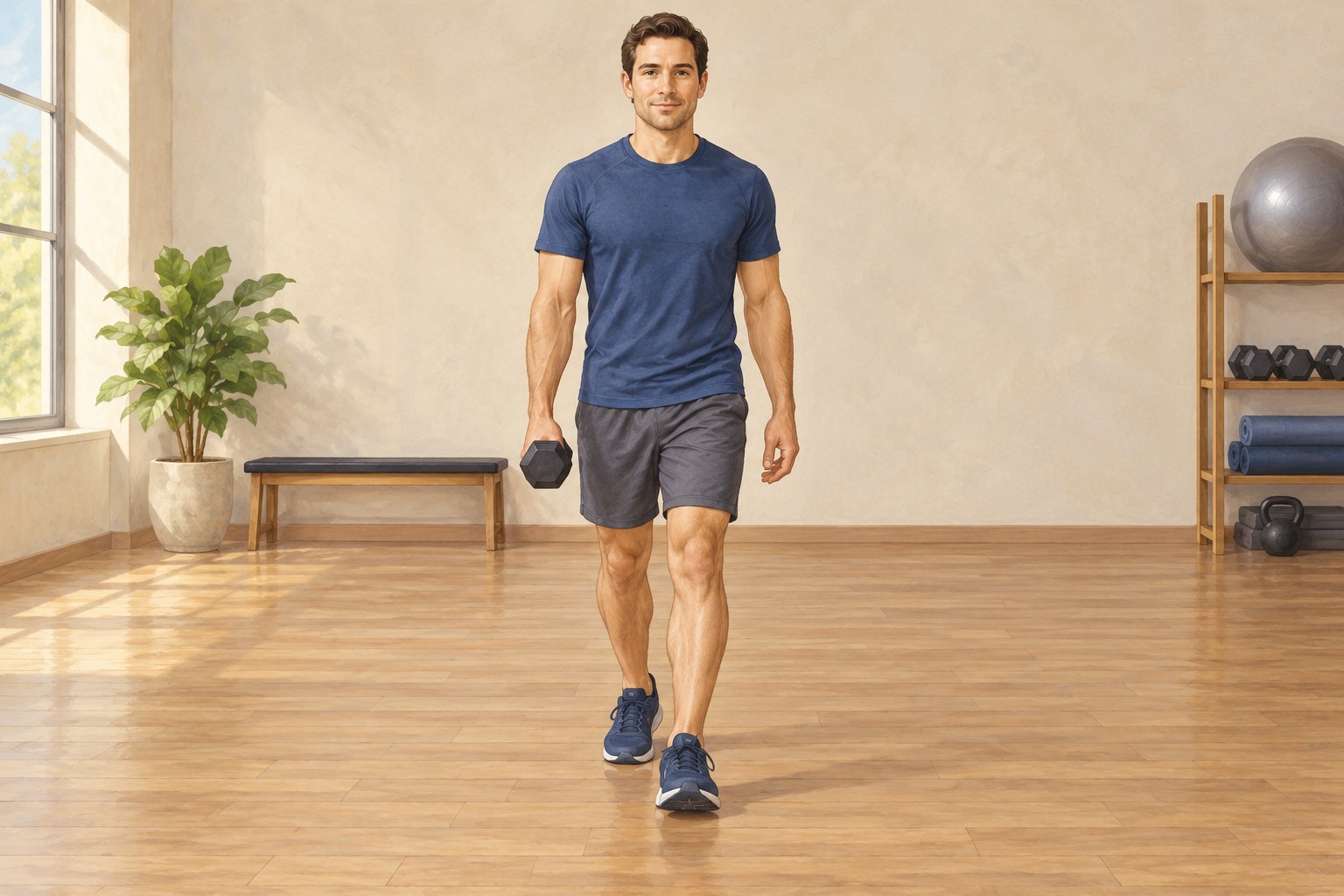
A suitcase carry uses one weight at a time. That uneven load makes posture and route choice worth checking before increasing either weight or distance.
Choose a level route wide enough that the weight will not strike furniture or another participant. Avoid stairs and tight corners. Walk the route empty-handed first and identify a clear place to put the weight down. A carry should not depend on finding a free patch of floor after your grip becomes tired.
Use a light dumbbell or other purpose-made weight with a handle you can hold securely. Do not substitute a bag with a frayed strap or uneven loose contents just because the exercise is named after luggage. Ask an instructor to demonstrate picking it up and setting it down without twisting.
Stand comfortably tall with the weight beside one leg, then walk at a controlled pace. Notice whether you lean markedly towards or away from the load. If so, reduce the weight and ask for feedback rather than exaggerating a lean in the opposite direction. The aim is not to freeze every natural movement, but to avoid being pulled into an uncontrolled position.
Let the free arm remain comfortable and keep breathing. Do not hold the weight away from your body to make it more difficult. That changes the leverage and may turn a manageable carry into a different task. A short route gives you a chance to learn the position without prolonged grip fatigue.
Stop before your fingers begin to lose control of the handle. Put the weight down deliberately, turn without it and then reset. Avoid passing a heavy weight from hand to hand while walking. Changing sides is easier to organise when the equipment is resting on a stable surface or the floor.
One side may initially feel less familiar. Record what you noticed without assuming that it identifies an injury or a defect. Use the amount agreed with your instructor rather than adding extra work to the awkward side on your own.
If the carry causes pain or a sense of instability, stop and seek appropriate guidance. A two-weight carry, a lighter load or another exercise may be preferable, but the choice depends on the situation. Keep load and distance in the log so that a future change is deliberate rather than driven by how heavy someone else's weight looks.