Movement basics
Standing hip abduction means moving a leg out to the side. A small range and reliable hand support help keep the task separate from leaning sideways.
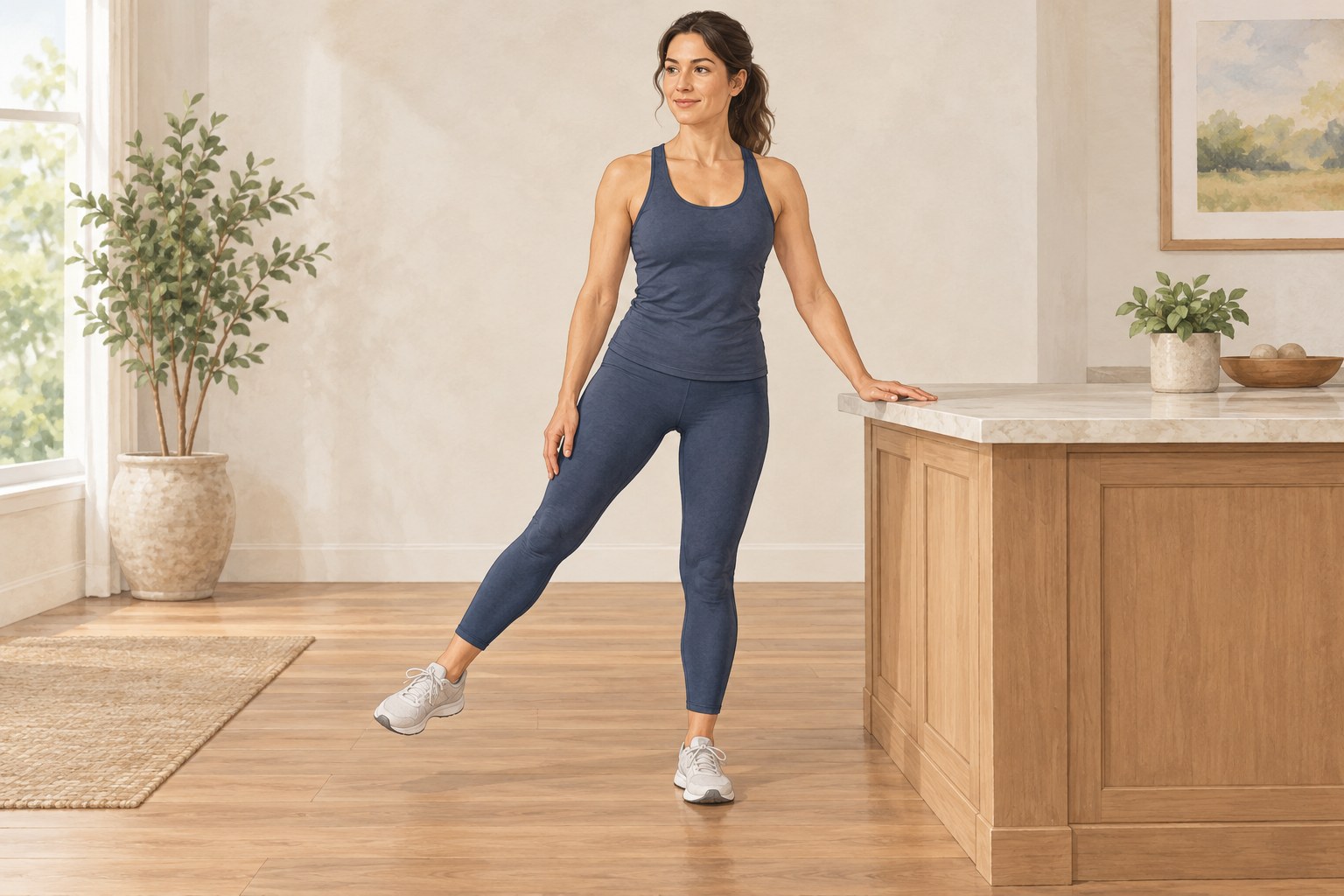
Stand beside a fixed counter or other suitable support, with enough space for the moving leg. If using a chair, check that it will not tip or slide. Keep the floor dry and clear of mat edges. Position the support close enough that your hand can rest on it without pulling the torso sideways.
Begin with both feet grounded and the weight comfortable through the standing leg. Avoid locking the knee forcefully. If standing on one leg even briefly feels insecure, ask for a more supported version rather than trying to remove hand contact as part of the exercise.
Lift one leg a small distance to the side, then bring it back under control. Keep the hips facing generally forwards and avoid a large lean in the opposite direction. The leg does not need to reach a particular height. A modest movement with a steady trunk is easier to repeat and assess.
Pause with both feet down if that helps you reset. Do not let the moving foot swing across the body on the return. If you need a strong push through the support to continue, shorten the range or end the set and rest. Adding speed tends to make the difference between lifting and swinging less clear.
Keep breathing and look ahead rather than watching the foot throughout. An instructor can observe the movement and help identify a suitable range. If the exercise produces pain in the hip, back or standing leg, stop instead of repeatedly trying to lift higher to find a better sensation.
An ankle weight or resistance band adds a separate demand and can change how the leg returns. Learn the unweighted version before deciding whether resistance is useful. Stronger equipment is not a necessary sign of progress, particularly if the purpose is controlled movement practice.
When changing sides, move your whole position so the support remains convenient. Do not reach across your body to keep the same handhold. Note the support and range used if you are following a programme. A clear, repeatable setup makes later adjustments more meaningful than an arbitrary count of increasingly large swings.