Movement basics
Raising the hand support changes a plank's demands, but the support must be able to take the load without sliding or tipping.
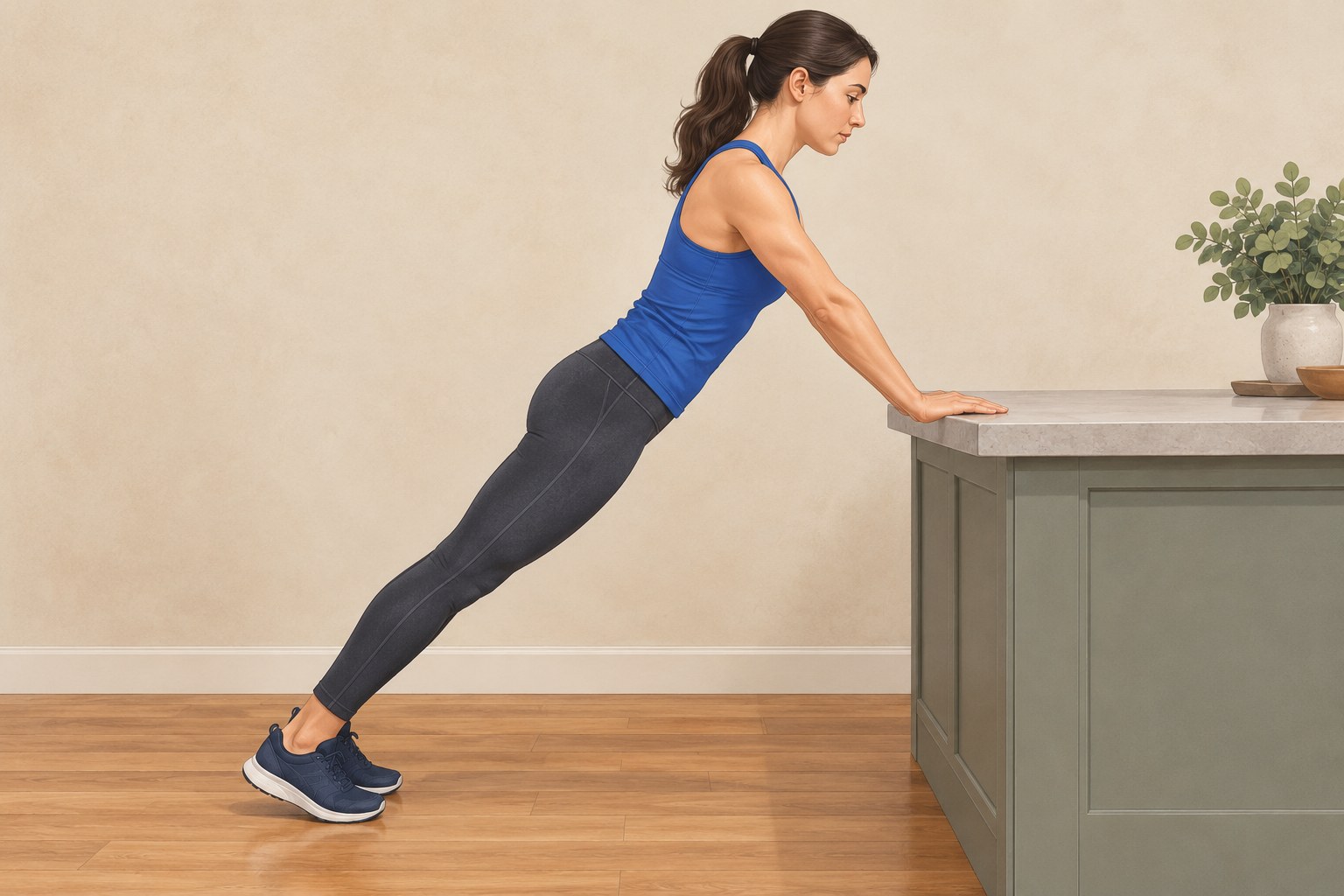
Use an appropriate fixed rail, sturdy exercise bench or other support that an instructor has confirmed is suitable. A light table, folding chair or wheeled item is not a safe substitute. Test for movement before leaning on it, and check that the hand surface and floor are dry.
A higher support is often more manageable than a low one. Begin where you can place the hands comfortably and step back without losing secure contact. Make sure there is a clear route to step forwards again at the end. Do not position yourself where someone might open a door or walk between you and the support.
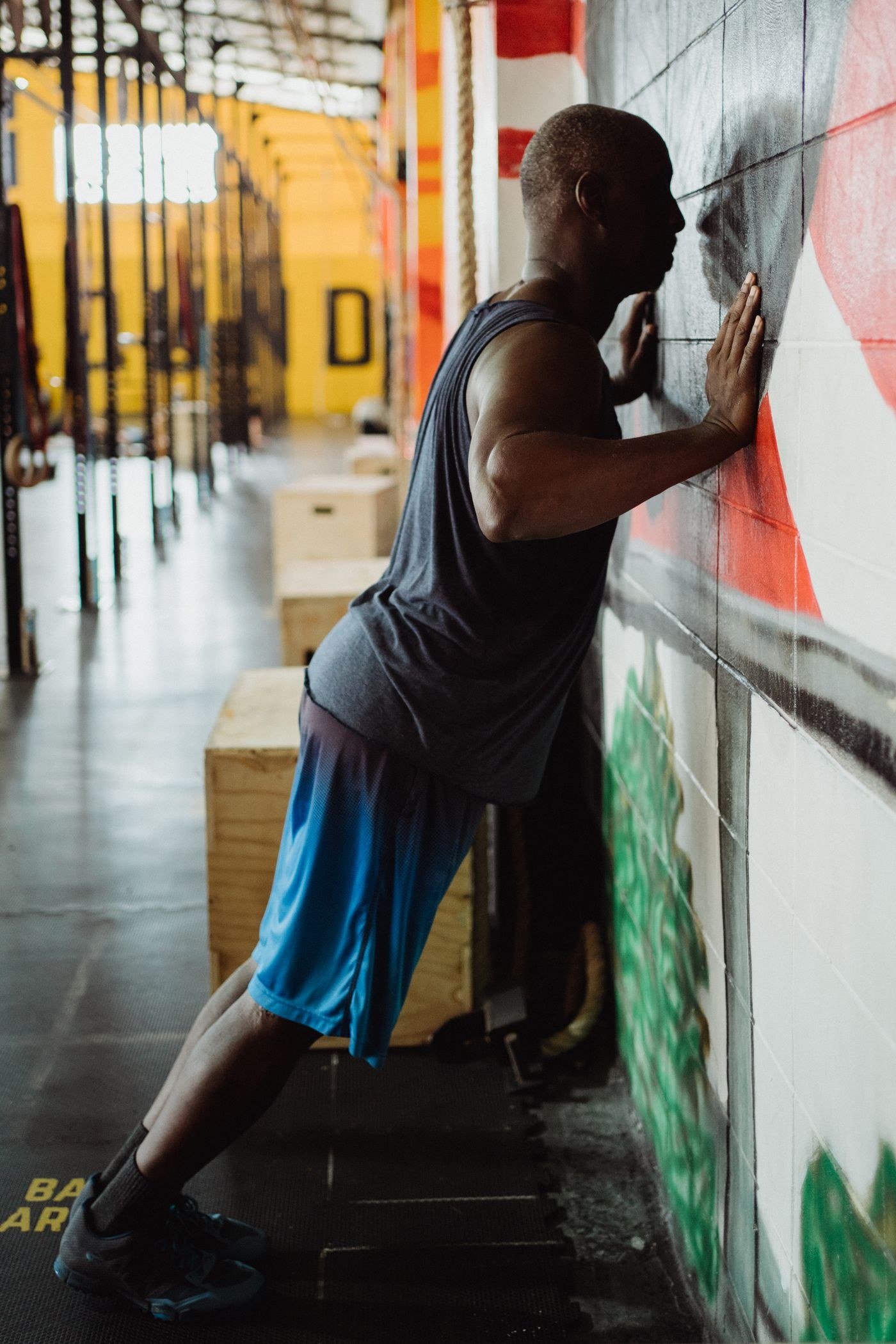
With the hands supported, step back to a comfortable inclined position. Keep the trunk and legs broadly aligned rather than allowing the hips to sag or pushing them far backwards. Breathe normally and use a short hold while learning. The goal is not to remain still until you cannot maintain the position.
Watch for the feet creeping or the support moving. Either is a reason to stop and correct the setup. If the wrists or shoulders hurt, step in and ask for another option rather than changing hand positions repeatedly under load.
Finish by stepping towards the support with control, then standing upright before removing the hands. Practise that exit at the beginning. It should feel ordinary, not like a last-second escape after the hold has become too demanding.
Support height, foot position and duration all influence the exercise. Change only the detail agreed in your programme and keep the others familiar. Lowering the support and lengthening the hold together may be a much larger change than intended.
Note the support used and whether you could breathe comfortably and finish smoothly. You do not need to compare your hold with an online plank challenge. If the exercise remains uncomfortable or unsuitable, choose a different task with guidance. The raised version is useful because it can be adjusted, not because it guarantees an easy or universally safe plank.