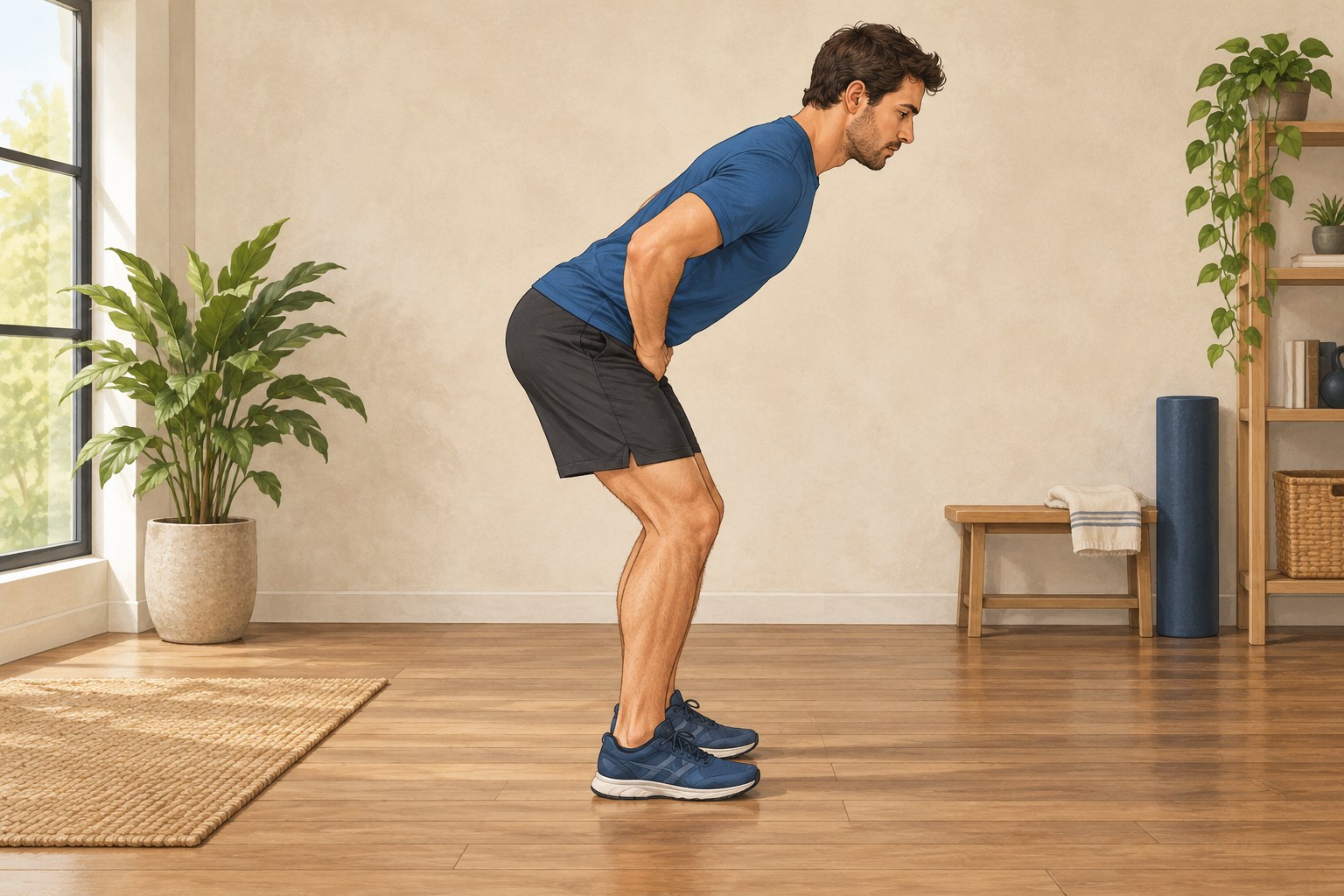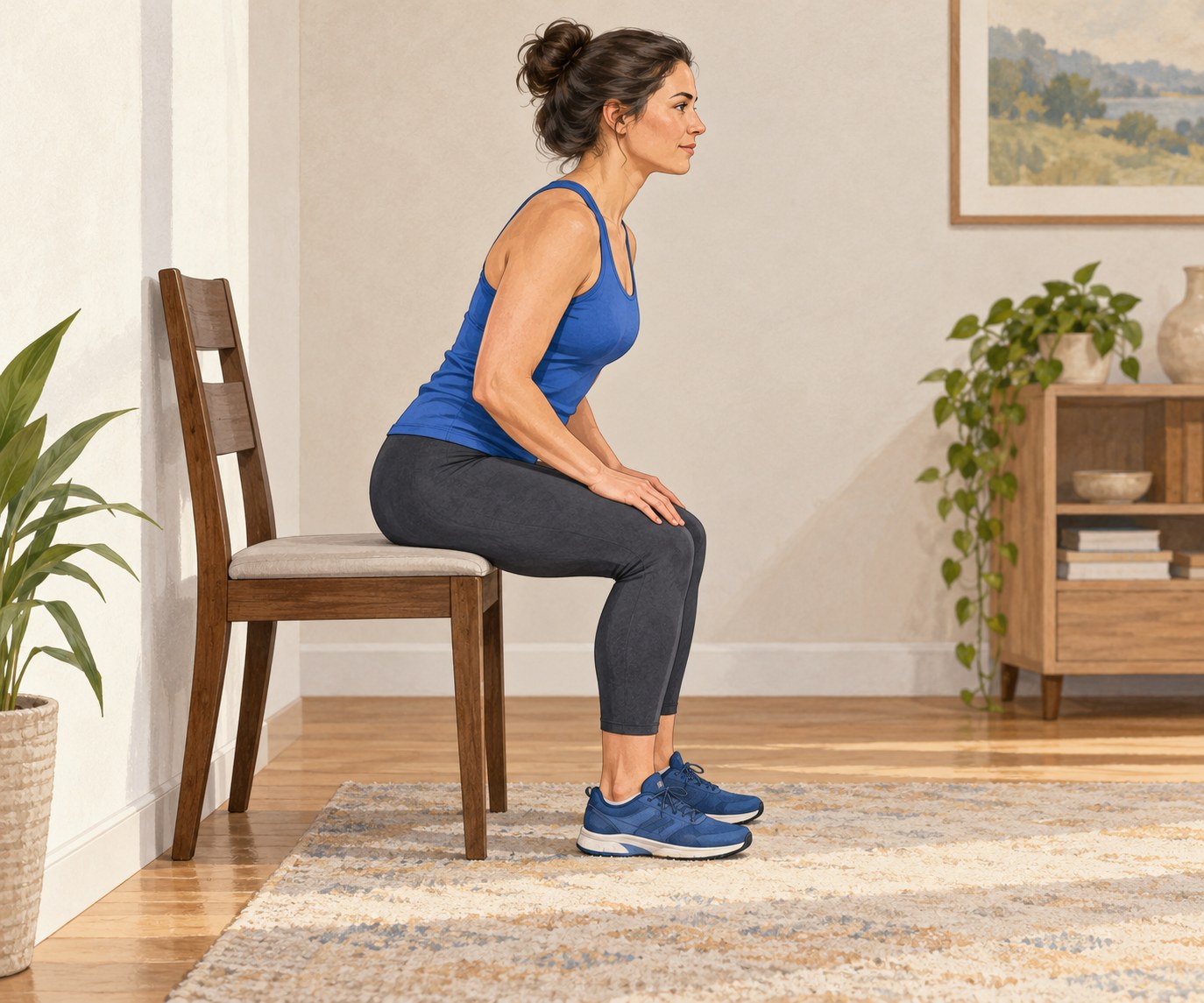
Movement basics
A short sequence works best when its exercises are already familiar and the transitions are easy to organise. Adding more movements is not the same as building a better session.
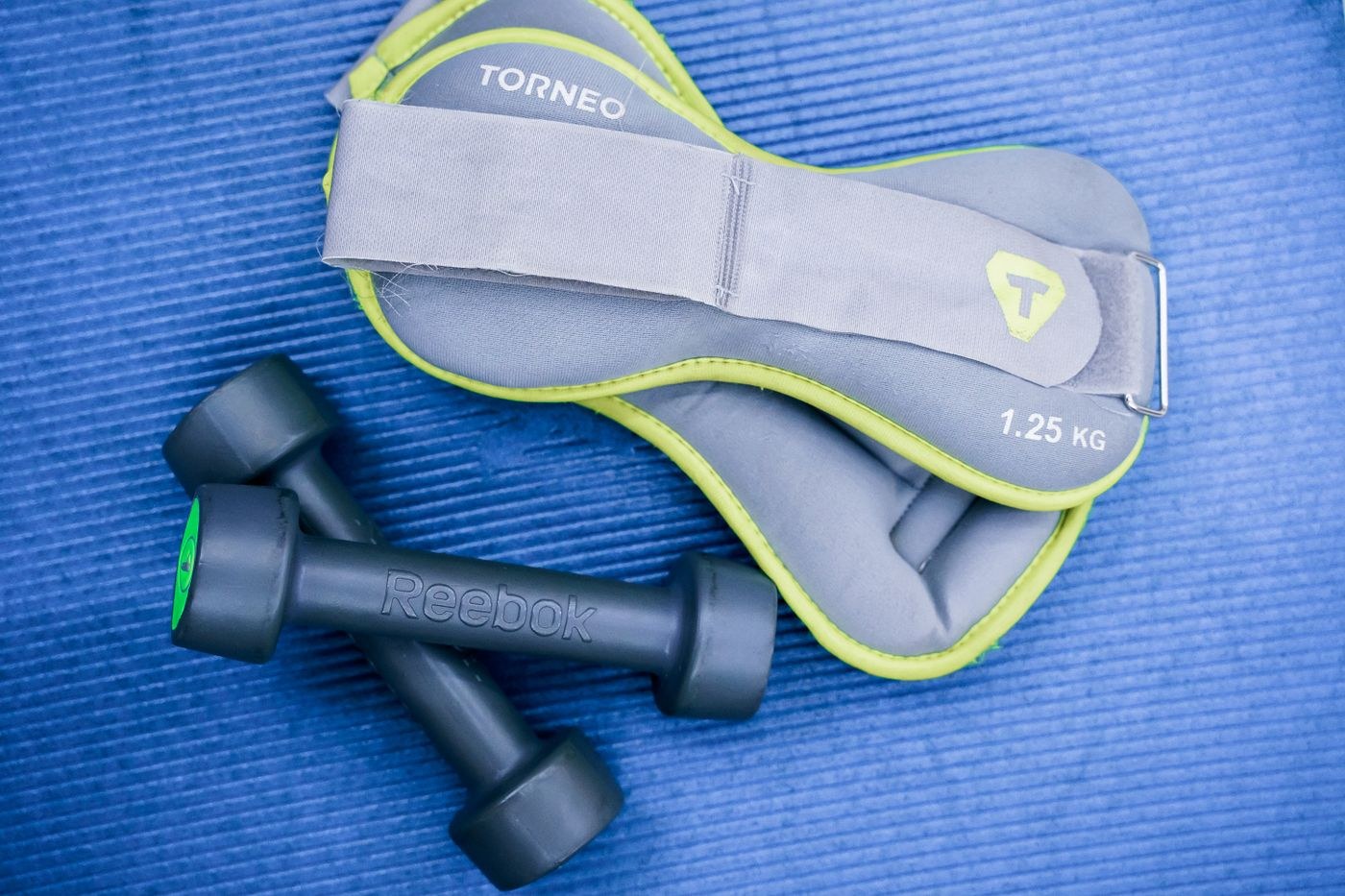
Decide whether you are practising technique, following a strength programme or taking a brief movement break. Those purposes call for different amounts of work. A few chair stands and wall presses may be a useful rehearsal, but they should not be presented as a complete programme for every adult or every goal.
If you already have a programme from an instructor or clinician, use its structure rather than assembling a competing routine from several websites. For a new general session, ask a qualified instructor to help choose movements and an appropriate amount. Bring a list of exercises you know, the equipment available and any relevant limits.
A short selection might include a leg movement, a pushing task, a pulling task where suitable equipment is available and comfortable aerobic activity. This is an example of how to think about variety, not a universal prescription. There is no need to include a particular exercise if the setup is unsuitable or the movement remains unclear.
Avoid selecting several demanding versions of the same pattern merely because each appears in a different article. Squats, lunges and step-ups all involve substantial lower-body work. Combining them can create more fatigue than their individual descriptions suggest. Ask how the tasks fit together and which can be omitted.
Keep new learning separate from a fast circuit. If you are still figuring out a band anchor or a floor transition, practise that with time and supervision before including it in a sequence. Familiarity means knowing the start, movement, finish and an easier option, not simply recognising the exercise name.
Arrange the exercises so you are not repeatedly stepping over weights or moving between the floor and standing in a hurry. Grouping tasks by location can help, provided that the overall programme remains appropriate. Leave a clear place for equipment that is not in use and keep the exit route open.
Include warming up, pauses between tasks and a gradual finish within the time available. If you have twenty minutes, that does not mean twenty minutes of uninterrupted work. Rest is part of the session, and the timer should allow it rather than create pressure to move before you are ready.
Write down what tells you to stop each task. It may be the agreed repetition count, the end of a short practice period or an earlier loss of control. Pain or feeling unwell requires stopping and appropriate advice, regardless of the plan. A sequence needs room for that decision.
Afterwards, note which transitions were awkward and whether the amount was manageable. Perhaps moving the mat would help, or a second floor exercise made getting up unnecessarily repetitive. Fix the organisation before assuming you need harder exercises.
Repeat a suitable version enough to understand it, then make a deliberate change with guidance if needed. Increasing load, adding another round and shortening rests at the same time makes the effect difficult to judge. A small familiar sequence can remain useful because it is clear and repeatable, not because it changes constantly.