Movement basics
A supported stance can make a one-arm dumbbell row easier to organise, provided the support itself is stable and the weight stays manageable.
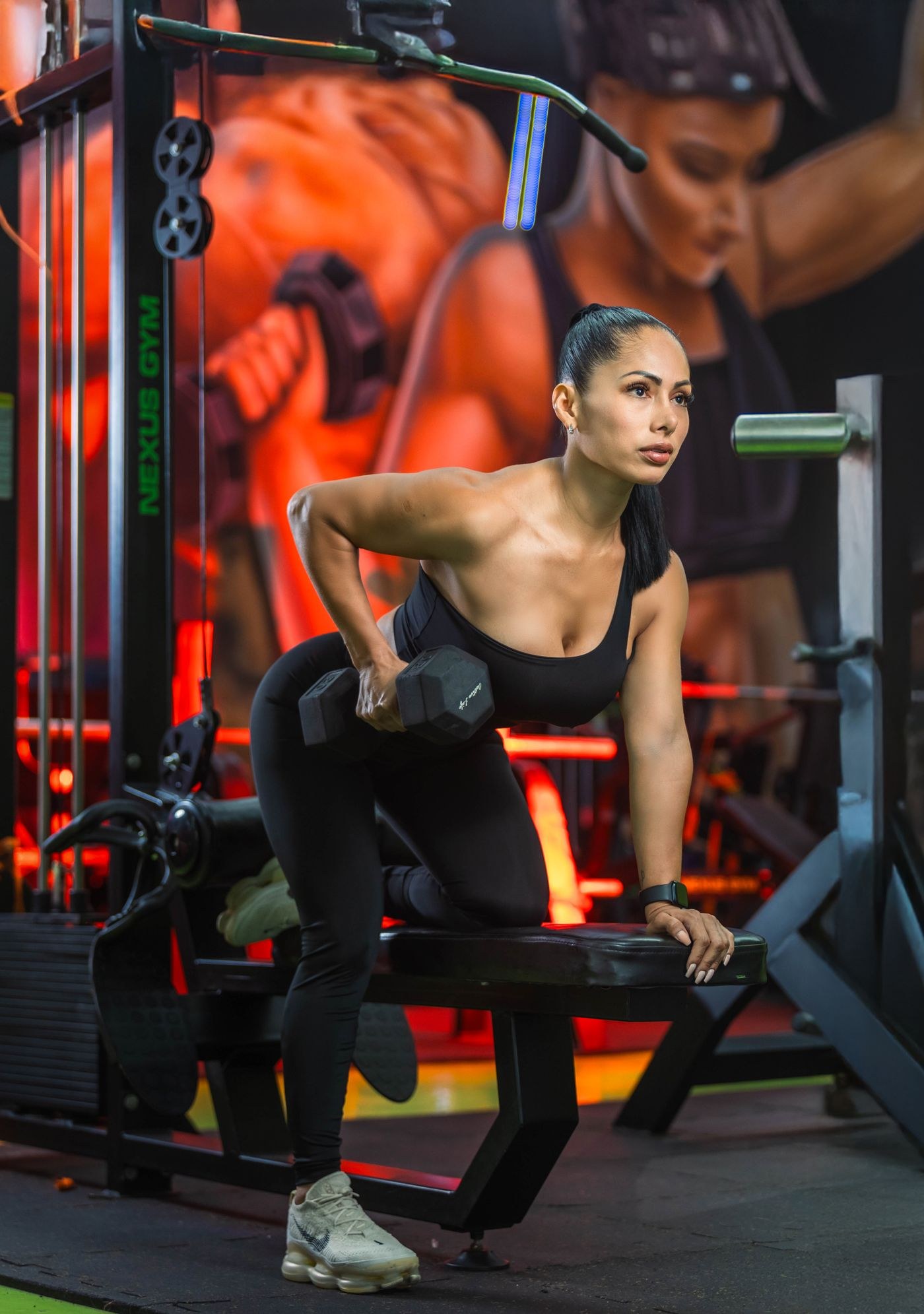
Use a suitable exercise bench or fixed support that cannot slide or tip when you place a hand on it. Ask an instructor to show a stance that fits the support height and your proportions. A coffee table or lightweight chair should not be chosen simply because it is within reach.
Place the dumbbell where you can pick it up without twisting around the support. Keep the floor clear around both feet. If you cannot reach the weight and establish the stance with control, ask for help with the setup or choose a different exercise. The transition into the row is part of the task.
With one hand supported and the torso inclined comfortably, let the working arm hang with the weight under control. Draw the elbow back, then lower the dumbbell deliberately. Keep the chest and hips relatively steady rather than rotating to make the weight travel farther.
Use a range that allows a smooth return. Pulling the elbow as high as possible is not the objective, and a heavy dumbbell can make a swinging movement look like a larger row. If you need momentum or a strong twist, reduce the load and ask for feedback.
Keep the neck comfortable, looking towards the floor ahead rather than lifting the chin to watch a mirror. Breathe throughout. If the supporting wrist, shoulder or back becomes uncomfortable, stop and adjust with guidance instead of assuming that only the working arm matters.
If the support feels steady but the working arm needs a large swing, the load may be more than you can currently control. If the weight is light yet you cannot find a comfortable torso position, the support height or stance may need attention instead. Describe those observations to the instructor. Simply reducing the weight does not correct every awkward setup, and changing the bench height does not make an uncontrolled heavy pull appropriate.
Ask to rehearse one side without the dumbbell if the sequence is confusing. Establish the foot position, supporting hand and comfortable torso angle, then introduce the light weight. Repeat the same process on the other side rather than assuming it will feel identical. Before ending, check where the dumbbell will rest and how you will stand upright. A supported row includes these transitions, and practising them calmly can remove the temptation to twist or reach around the bench after the working arm is tired.
Set the dumbbell down carefully before changing the support and foot position. Rebuild the stance on the other side rather than trying to pass a weight behind your legs or turn while holding it. Check that the new position has the same clear floor space.
Record the load and the version of support used. One side may feel less coordinated, but that does not automatically identify a problem that needs self-correction with extra repetitions. Practise the agreed amount and discuss persistent differences or discomfort with an appropriate professional. A controlled setup and return give you a better basis for progression than a heavier number in the log.