Movement basics
Shortening a dead bug reach lets you practise moving a limb while keeping the trunk comfortable and relatively still. The floor is a reference, not a target for every hand and heel.
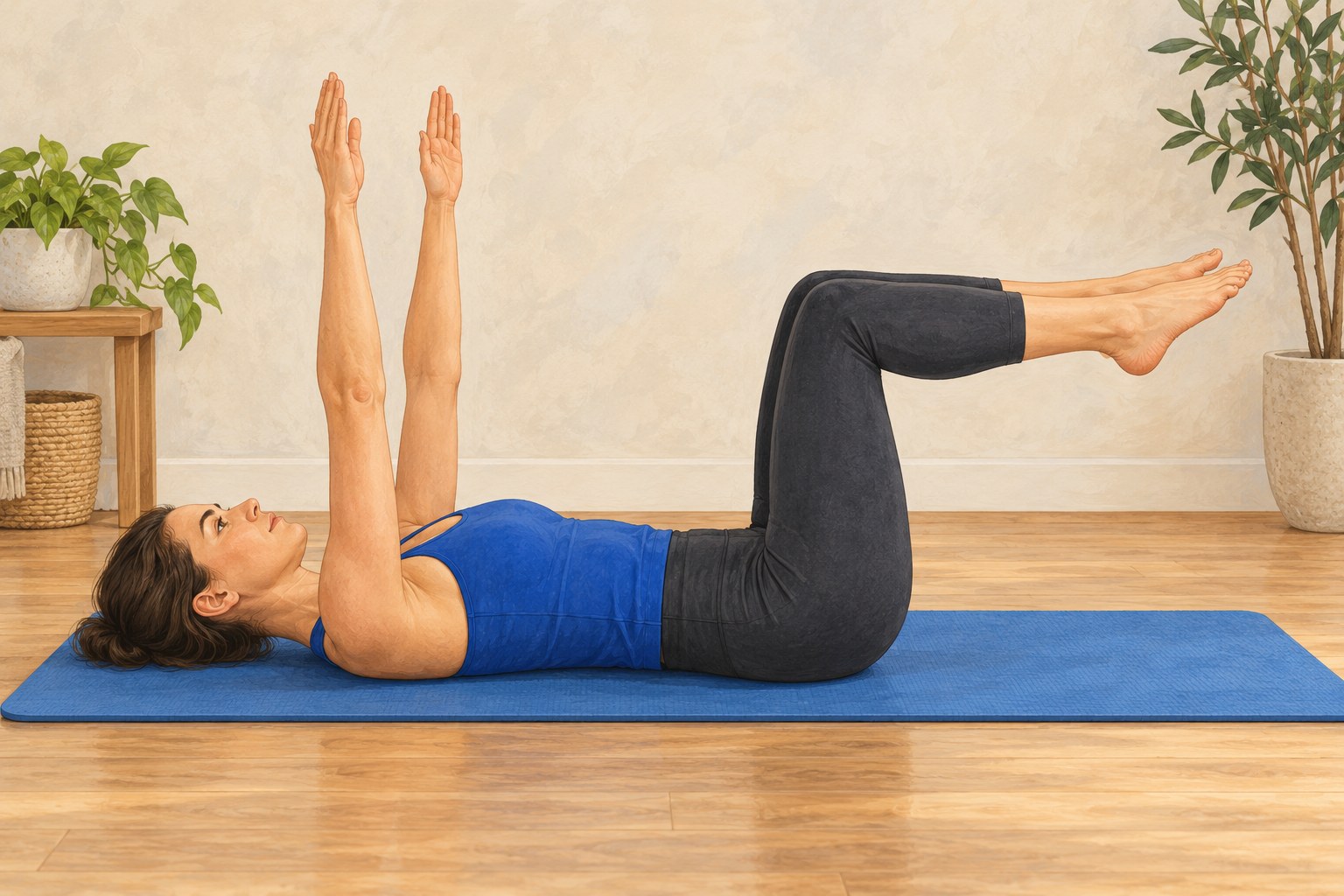
Lie on your back on a firm mat with enough room to extend the arms and legs without hitting furniture. Begin with the knees bent and feet supported on the floor. Settle into a comfortable trunk position and breathe normally before lifting anything. If lying on your back or getting to the floor is unsuitable, ask for a different task.
A common dead bug position raises the arms and bent legs above the body. That position can itself be demanding. You do not have to begin with all four limbs lifted. Ask the instructor whether keeping one or both feet supported would make a clearer starting point for you.
Practise a small arm reach while the legs remain supported, or a short leg movement with the arms resting, according to the version you have been shown. Notice whether the trunk position changes as the limb moves away. The aim is not to hold yourself rigidly with a strained breath, but to control a manageable movement.
Return to the starting position before trying the other side. If you cannot tell which part is moving, make the range smaller and pause. An instructor watching from the side can help you distinguish limb movement from a large change in the back or pelvis. Trying to watch your own feet throughout can lift the head and make the task more complicated.
In the familiar combined version, one arm and the opposite leg move away from the centre, then return before the sides change. Keep the reaches short enough that you can maintain a comfortable trunk position and continue breathing. There is no requirement for the heel or hand to touch the floor.
If the back arches noticeably as the leg extends, shorten the reach or return to a supported version. If you rush because the opposite-side pattern is confusing, separate the movements again. Coordination and effort are different challenges; simplifying one can help you understand the other.
Move deliberately in both directions. Letting a foot drop to the mat or throwing the arm overhead changes the task. A few well-organised attempts, with rests, are more informative than continuing until the pattern becomes difficult to recognise. The number of repetitions should follow the version you can control rather than determine it.
The dead bug is often described as a core exercise, but it cannot diagnose back problems or prove that your spine is protected during other activities. Do not interpret shaking, asymmetry or difficulty as a medical finding. If the movement causes pain, stop and seek appropriate advice rather than tightening harder to push through.
For a training note, describe the actual version: feet supported with alternating arm reaches, for example, or short opposite-limb reaches. Record the cue that helped you breathe and control the return. That gives the next session a useful starting point without suggesting that the longest possible reach is the only successful version.