Movement basics
A calf stretch after activity should feel like a gentle stretch, not a test of how far you can push the heel away from the wall.
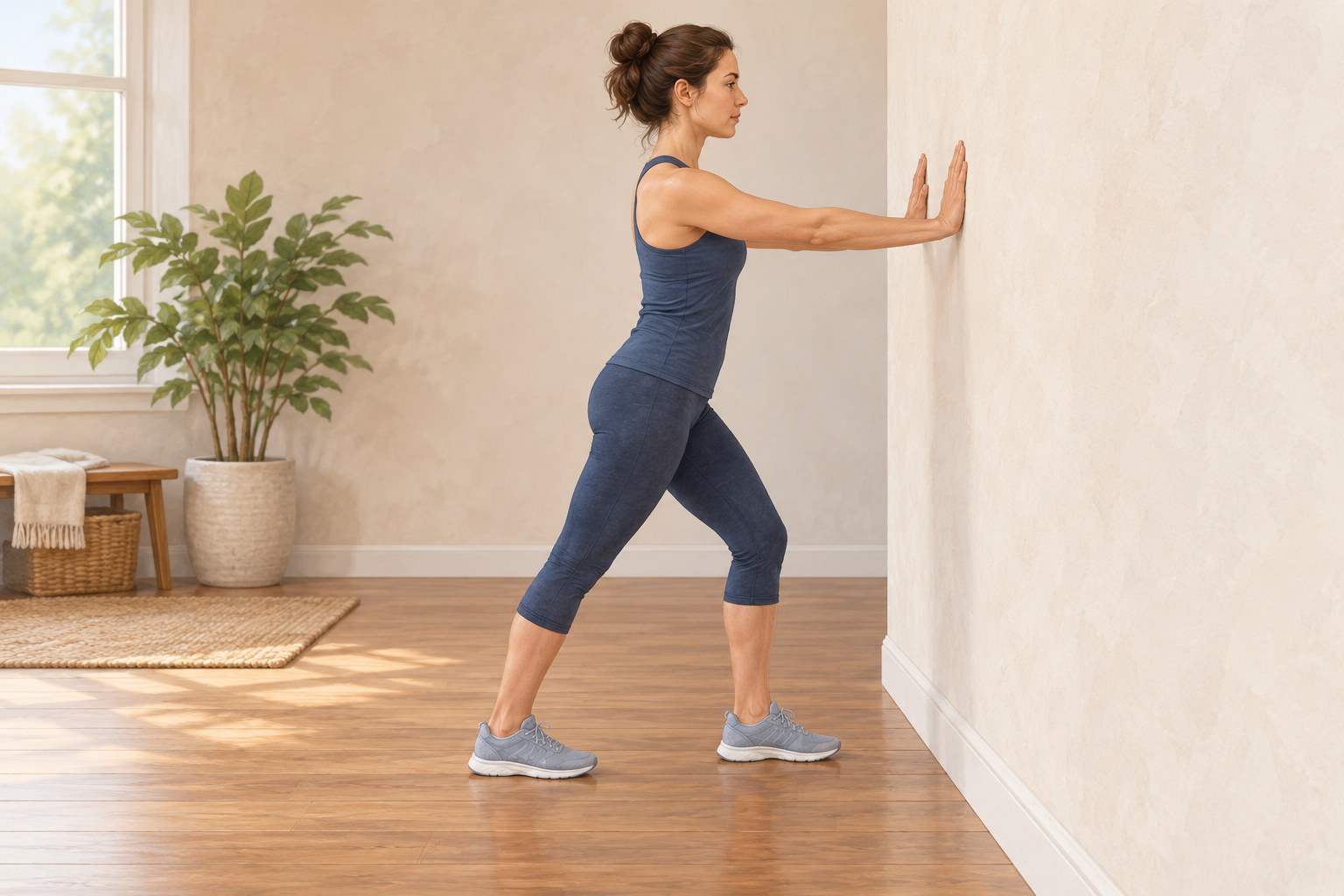
Face a solid wall and place the hands on it for support. Step one foot back a comfortable distance, keeping both feet securely placed and the rear heel down. Bend the front knee gently while allowing the rear leg to remain relatively straight. Adjust the distance rather than forcing the heel down from a position that is too long.
Keep the body facing the wall. If the rear foot turns sharply outwards or the torso twists, shorten the stance and reset. A small adjustment can make the position easier to understand. You do not need to reproduce another person's step length, which may reflect different proportions or a different version of the stretch.
Stay within a comfortable sensation and breathe normally. Avoid bouncing or asking another person to push you farther. If you feel pain, numbness or a sharp pulling sensation, come out of the position rather than waiting for it to disappear. The stretch is optional, and it should not be used to work through a suspected injury.
Ease the pressure, bring the feet closer and change sides with time to rebuild the stance. Do not pivot quickly on the rear foot while still leaning into the stretch. Use the duration and amount agreed with your instructor or clinician rather than assuming a longer hold is always better.
Stretching does not guarantee that you will avoid soreness or injury after a demanding session. It is not a way to undo work that was too much. If the calf is painful, swollen or unusually tender, seek appropriate advice instead of treating a stronger stretch as the solution.
For ordinary post-activity use, note whether the stance felt comfortable and whether you could keep the heel supported. The next session can repeat that modest position. A calmer, consistent stretch is more useful than chasing a deeper endpoint that requires turning the foot, holding the breath or leaning heavily through the arms.