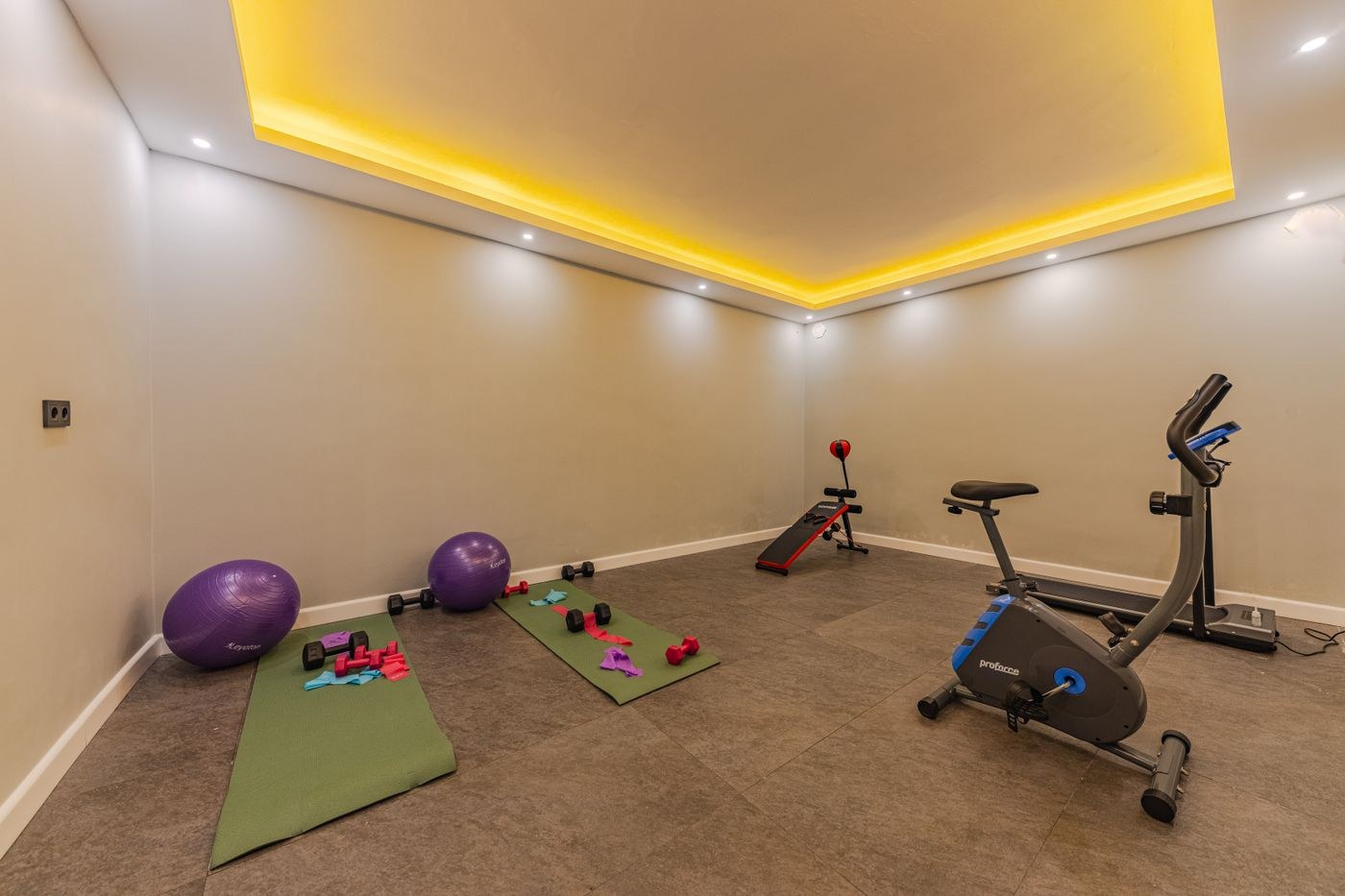
Home & outdoors
Storage should make equipment easy to retrieve without leaving a rolling, falling or tripping hazard for the rest of the day.
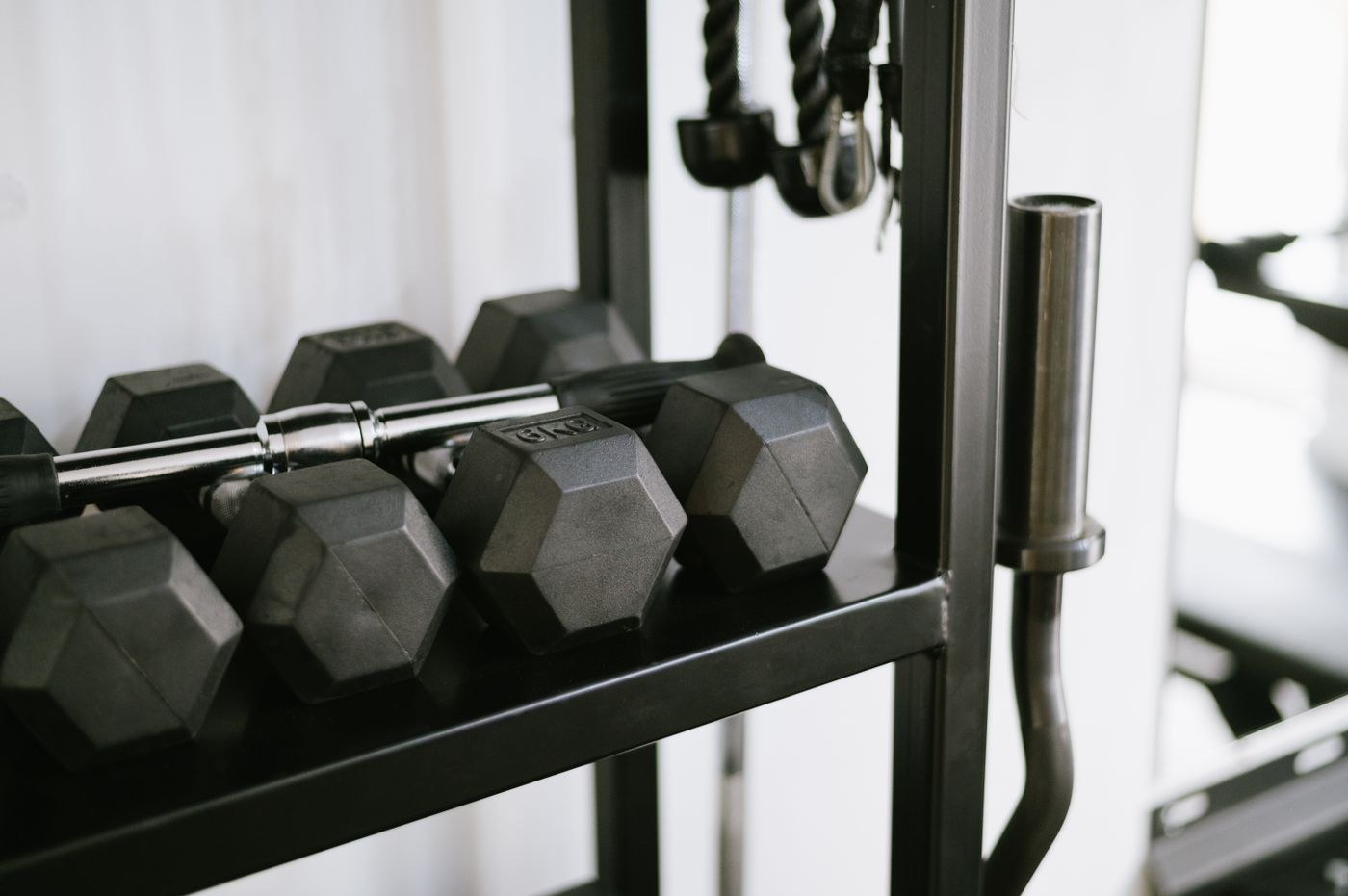
Keep dumbbells and other heavy items low on a suitable surface or purpose-made rack. Check the rack's capacity and assembly instructions rather than estimating from its appearance. Avoid stacking weights on a shelf that was designed for household clutter, and do not leave round weights where they can roll into a walkway.
Leave enough room to pick up each item without twisting around furniture or lifting another object out of the way first. If the storage position makes you reach awkwardly every time, it needs changing. A tidy-looking arrangement can still be inconvenient or unsafe to use.
Consider who else can reach the equipment. Young children may pull an object down or place fingers between plates. Pets can chew bands or knock loose accessories into the room. Storage must suit the household between workouts, not just look organised while you are standing beside it.
Items used every session should be reachable without lifting a heavy box or unloading a cupboard. Less frequently used accessories can sit further back, provided their storage remains suitable. This reduces the temptation to leave equipment on the floor because putting it away feels like another workout.
Label a small container for compatible attachments rather than mixing every pin, clip and collar together. Two parts may look similar while having different dimensions or load ratings. Keep original labels where possible and avoid borrowing a fastener from another item to replace a missing part. If you cannot identify a component, ask the manufacturer before using it.
For shared equipment, agree who checks and returns it. A simple note that a band has been removed from use is better than placing it back beside sound bands and hoping the next person notices the damage. Keep faulty items clearly separate until they are disposed of or dealt with through the correct repair or replacement process.
Clean equipment in the way its manufacturer specifies and let it dry before closing it inside a box or bag. A damp mat rolled tightly for several days is harder to keep clean. Give it a drying position that does not block a door or create a slippery patch beneath it.
Store resistance bands relaxed, away from sharp edges and conditions the manufacturer warns against. Do not leave them stretched around a hook or under a heavy object. Keep removable collars, adjustment pins and attachments together with the equipment they belong to so that a missing part is obvious before use.
Keep the instruction booklet or a saved manufacturer link with the model details. This is particularly useful for adjustable equipment, where parts that look similar may not be interchangeable. A photograph of the label can help with future replacement-part or recall enquiries.
Before bringing equipment into the workout space, look for damage, missing pieces or signs that storage has affected it. A band with a cut or a locking mechanism that no longer behaves normally should be removed from use rather than put back for another day.
Review the arrangement after adding new kit. A storage box that worked for one pair of light weights may no longer be suitable when its contents double. Buying fewer items that you can store and handle properly is often more useful than building a collection that occupies every clear corner.