Home & outdoors
A room can look empty and still be too small for the movement you intend to practise. Check the whole movement, not just the footprint of a mat.
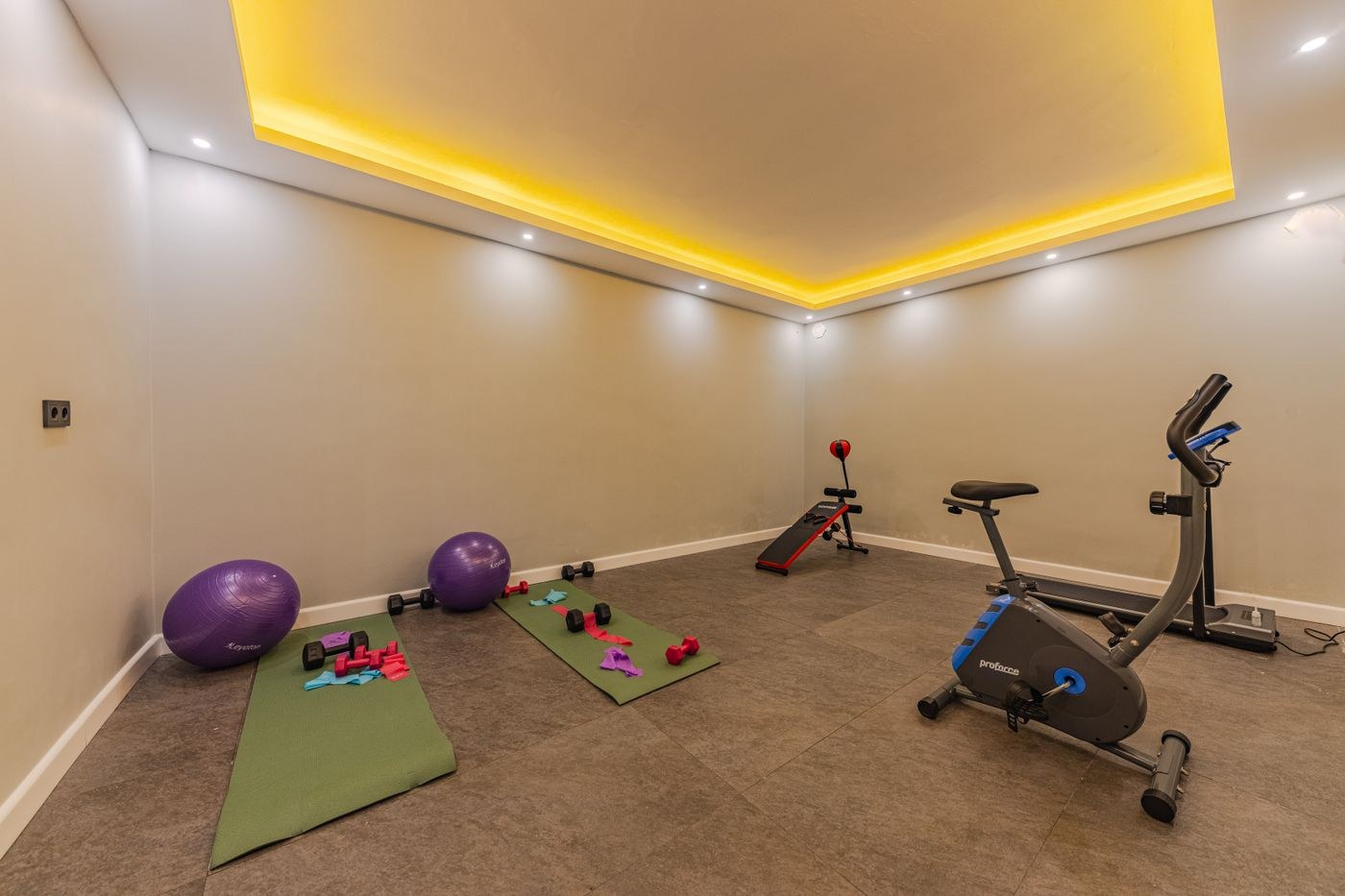
Choose the exercises before moving furniture. A floor exercise needs room for your body, while a side step needs clearance beyond the mat and an overhead reach needs height. Stand where you expect to train and slowly rehearse each movement without resistance. Check both sides of the body. Include the space needed to get down to the floor and stand up again.
Look above and behind you as well as ahead. Ceiling lights, low shelves, open drawers and the edge of a coffee table can sit outside your normal line of sight. Do not rely on remembering to stop a movement just before an obstacle. Shorten the exercise deliberately or choose another location.
A room can accommodate each position separately but still make moving between them awkward. Rehearse where you will place your hands when getting up, where a weight will rest while you change sides and how you will turn to face the screen. Keep those transition areas clear too. The corner of a mat is not a suitable storage place if you need to step across it a moment later.
Think about ventilation and light without introducing new obstacles. Opening a window or moving a lamp may help, but a cable or window handle should not enter the movement area. Check that you can see the floor and read any instructions without glare. A mirror is optional; it should be securely fixed if present, not leaned against a wall where a nearby movement could knock it.
For example, a short room may accommodate stationary marching and a wall exercise but not a walking carry. Keep the first two and move the carry to a genuinely suitable venue, rather than shortening every stride around furniture. This preserves the purpose of the movement instead of making the available room dictate an improvised technique.
Move loose rugs, charging cables and small objects out of the working area. Check that the mat stays flat on the actual floor rather than sliding when you transfer weight. Socks on a polished surface may behave differently from training shoes; test the combination gently before starting.
Leave the doorway and an exit route clear. A closed door can reduce interruptions, but nobody should have to step over weights to reach you. Tell other household members when you will be moving, particularly if the door opens towards the training area. Keep children and pets in a separate supervised space, not behind a makeshift barrier made of equipment.
Put only the equipment for the next exercise within reach, outside the area where your feet will land. Store the rest securely. If a chair is part of a planned exercise, it must be stable and suitable; a lightweight folding chair or wheeled office chair is not a substitute.
A useful final check is to walk into and out of the space carrying nothing. If you have to squeeze past furniture, cross a cable or turn sideways around a weight, simplify the setup. A smaller selection of familiar movements is more useful than forcing a full video workout into a room that cannot accommodate it. Recheck the layout whenever furniture, equipment or the exercise changes.