Around Bournemouth
Planning a walk through Bournemouth Lower Gardens
Read the articlePhoto: Tiia Monto / CC BY-SA 3.0 · Source · Licence · Cropped/resized.
A Southbourne beach walk has two parts: reaching the promenade and returning from it. Check the access route before choosing the distance along the shore.
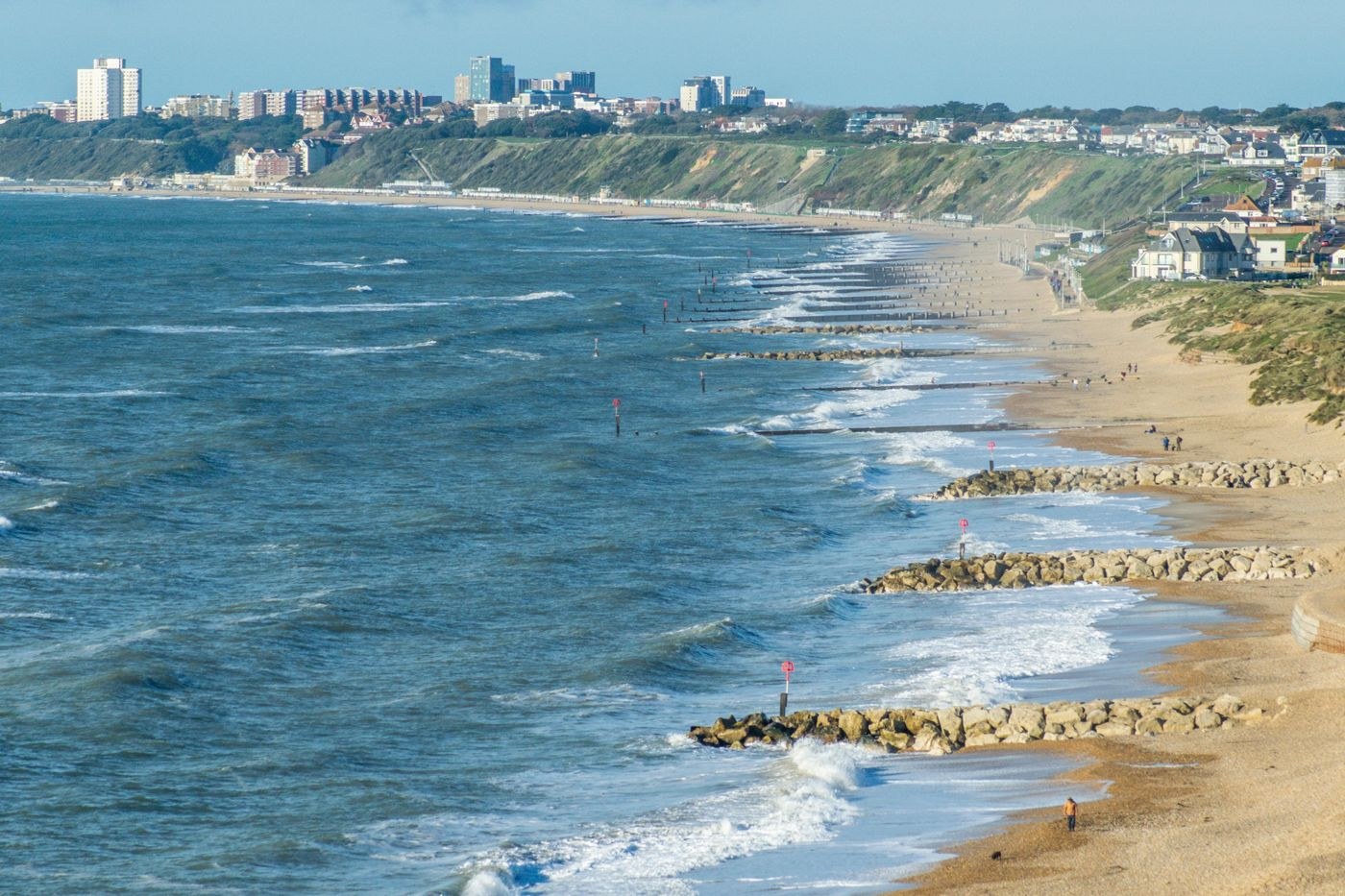
BCP's Southbourne beach information identifies an approach through Fisherman's Walk and refers to local zig-zag access routes. These descriptions are useful starting points, but they do not mean that every route has the same gradient, surface or number of steps.
Locate the exact entrance on a current map and connect it to your arrival point. A bus stop or parking place near the clifftop can still leave a descent before the seafront walk begins. Include that approach in your time and effort estimate rather than treating the promenade as the only walking involved.
If you need a step-free route or have limits on slopes, confirm details with the relevant local information service. Ask about the particular route, not simply whether Southbourne is accessible. Temporary works and closures can affect a route that was suitable on a previous visit.
Descending can make the outward journey feel easy, but returning to the clifftop may be the more demanding part. Choose a shorter promenade section if you want to keep enough energy for the access route back. Do not leave the return decision until you have walked further than intended.
If you intend to use a lift or another service, verify whether it is operating for the date and time of your visit. Do not build the entire plan around an unconfirmed service. You need an alternative that suits you, or a different starting point that avoids that dependency.
The clifftop and beach can have different exposure to wind and sun. Look at the forecast and inspect the ground on arrival. Wet leaves, sand and rain can affect footing on access paths as well as the promenade. Follow barriers and do not take an unofficial shortcut down a slope.
Keep away from cliff edges and do not climb fences or walls. If you move from the promenade onto the beach, assess the sea and tide conditions separately. A planned walking break does not need an improvised detour to the water.
BCP lists toilets and other beach facilities, but check current opening arrangements if you depend on them. A facility shown on a map may be closed or reached by a route that does not suit you. Carry essentials rather than assuming a kiosk is available throughout the year.
For a first outing, choose a clear meeting point and a modest turnaround. Tell companions that the access climb is included in the plan so nobody extends the promenade section without considering the return. Leave time for pauses and the onward journey.
Afterwards, note which approach you used and whether it worked comfortably. Southbourne can then become a familiar option with a known route, rather than a broad destination whose access you have to solve on every visit. The most useful distance is the one that includes getting back to where you need to be.
Around Bournemouth
Photo: Tiia Monto / CC BY-SA 3.0 · Source · Licence · Cropped/resized.