Training kit
An armband or running belt should keep essentials secure without making you change the way you move.
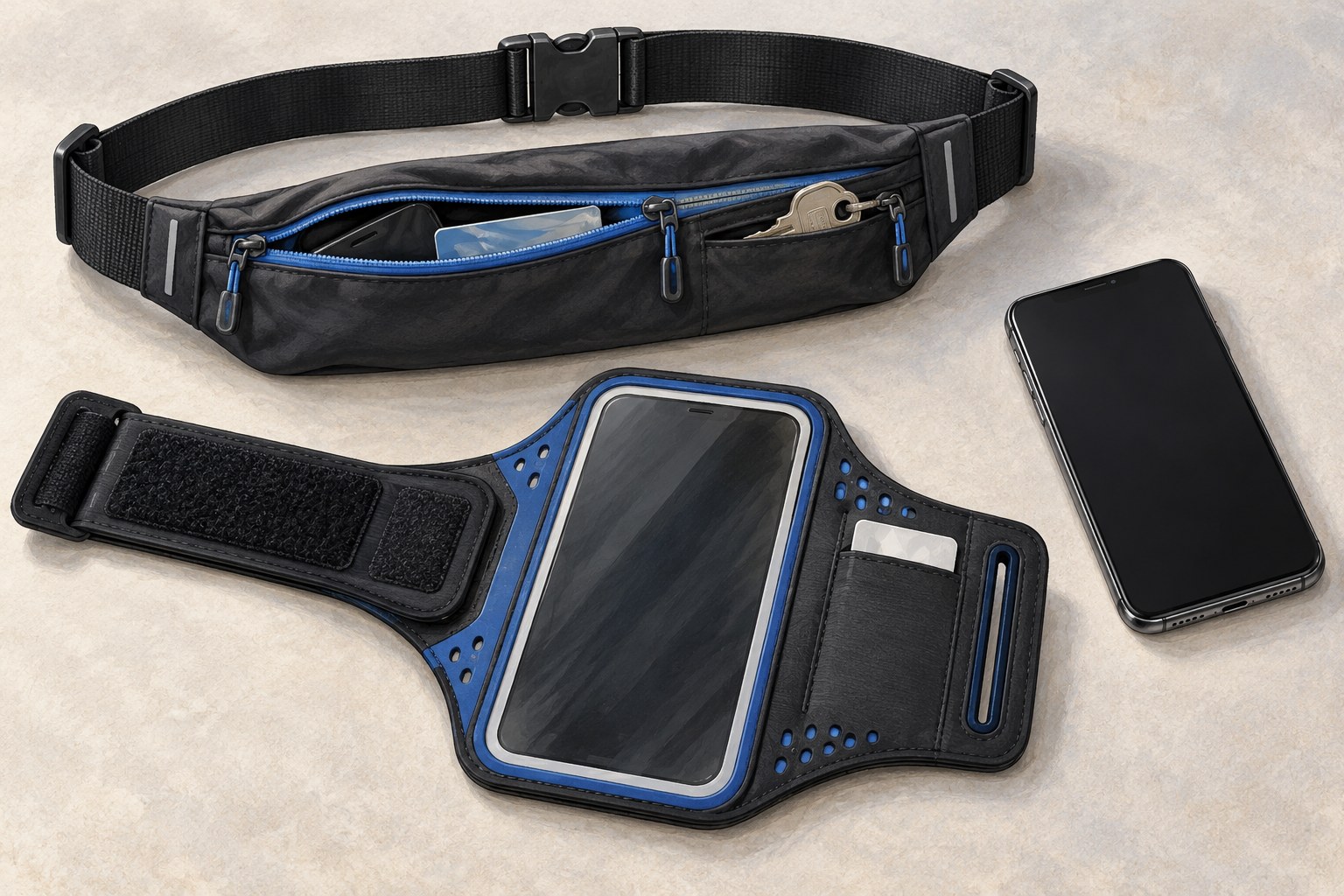
Measure the phone with its case, then add the key, card or other small items you need. A pouch described for a particular screen size may not accommodate a thick protective case. Avoid squeezing a phone into a pocket so tightly that removing it becomes difficult.
Separate sharp keys from the screen. Check closures and whether the contents remain secure when you bend or sit. A pocket designed for a light card is not necessarily suitable for a heavy phone. Keep the load small rather than using every available compartment.
An armband can leave the waist free, but it may rub, slip or affect how you swing the arm. Check the adjustment range over the clothing you intend to wear. It should not require uncomfortable tightening to stay in place.
A belt spreads the load around the waist but can bounce or press during floor exercises. Try walking, a gentle bend and a seated position within the retailer's testing rules. Consider whether you will need to remove it during class and where it will then be stored.
Check access while safely stopped. You should be able to retrieve the phone or key without emptying the pouch on the ground. Do not practise operating a phone while crossing roads or moving through a busy shared path; convenient access does not make divided attention safe.
If the phone is used only for emergencies and a ticket, a secure closed pocket may be preferable to a transparent window intended for constant interaction. If it supplies an audio programme, check that you can pause it without removing the whole carrier. Do not buy a display window merely because it looks convenient if you do not need to read the screen while active.
Consider which side of the body carries the load. An armband that feels fine during walking may press against the floor in a side-lying exercise. A belt can sit under a waistband or against the back when lying down. Decide in advance which movements require the carrier to come off and where it will be placed safely.
A useful fitting test includes the actual case, key and clothing layers. Move gently, stop, retrieve the key and replace it, then check whether the fastening still sits correctly. This reveals more than testing an empty pouch for a few seconds. Avoid tightening a strap progressively throughout a session to compensate for a design that does not suit your body.
Read the precise protection claim. A sweat-resistant pocket may not protect a phone in heavy rain, and a zip opening can be a weak point. Use separate protection where needed and follow the phone manufacturer's guidance. Do not assume a fabric pouch makes a device waterproof.
Look for washable or wipeable surfaces and a realistic drying method. Sweat can remain in seams and straps, so unpack the carrier after use. Inspect fastenings and elastic as they wear.
For an indoor class with secure storage, carrying the phone on your body may be unnecessary. Compare that option before buying an accessory for every session. The best arrangement is the one that keeps the few essentials you need available without bouncing, rubbing or distracting you from the activity.