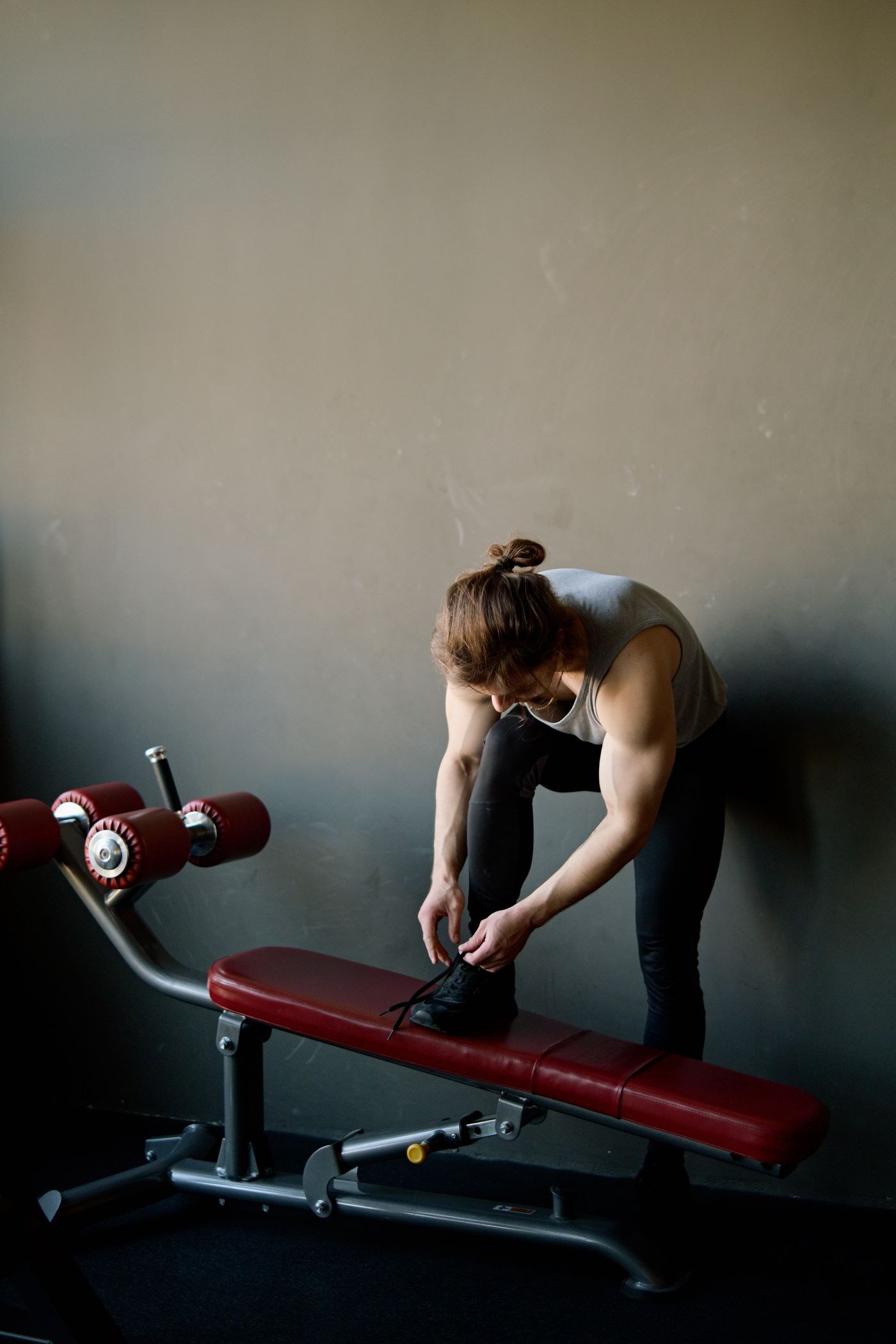
Training kit
A wet compartment helps separate used clothing during the journey home. It should be easy to empty and dry, not just hidden inside a large bag.
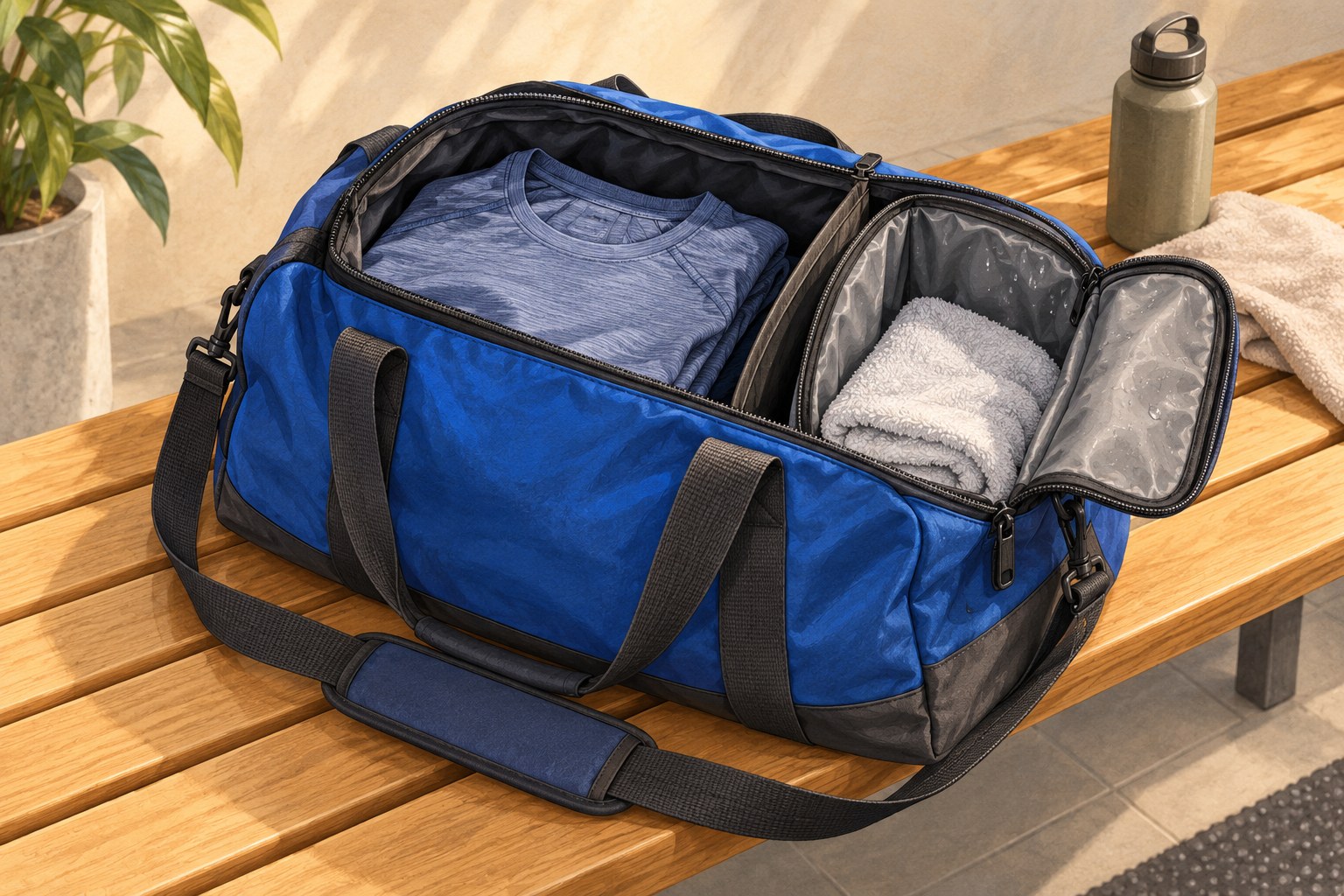
Estimate what will actually be damp: a small towel, a top, socks or an entire change of clothes. Check whether the compartment is large enough without taking all the space from the dry section. A bag's total litre capacity can hide a very small wet pocket.
Look at the opening and lining. Can you turn the pocket out or reach its corners to clean it? Are seams and zips described as water resistant, or is the compartment simply a separate fabric space? Do not assume that the word wet means fully leakproof. Keep electronics and important papers separately protected.
Pack the bag in the way you would use it, if an in-store test is available. Put shoes, bottle and clean clothing in their intended sections and check whether the load remains comfortable. A shoulder strap that feels fine on an empty bag may press differently when it is full.
Consider the journey to the venue. A compact backpack may be easier on a bus or a walk, while a holdall can offer a wider opening in a changing room. Check that the bag fits available lockers without forcing it against the door. Keep keys and any access card in a pocket you can find without unloading everything.
An internal wet pocket may expand into the main compartment when filled. Check whether there is still room for clean clothing and shoes once the towel is inside it, rather than comparing empty pockets independently. An external pocket may be easier to reach but can make the bag unbalanced if it holds a heavy wet item on one side.
Look at how the wet section closes. A roll-top pouch, zip and drawstring offer different containment, and none should be assumed waterproof without a specific claim. Keep a leaking bottle separate from clothing too: a wet-clothes compartment is not necessarily intended to hold free liquid.
Consider the locker routine. If you need to open the main compartment to remove a used towel, can you do that without putting clean clothes on the changing-room floor? A simple removable pouch may let you unpack in a more orderly way. Choose the layout around the sequence of changing and packing, rather than the number of pockets printed on the label.
Remove damp clothing as soon as practical after returning. Wash it according to its labels and let the wet compartment itself dry. Sealed storage is useful for transport, but leaving sweaty kit inside for several days makes the bag harder to keep fresh.
A removable wet pouch can be easier to clean or replace than an integrated pocket. It also lets you use a bag you already own. Compare that option before buying a larger bag solely for one feature. Check care instructions for the lining and straps, and avoid assuming the whole bag can go in a washing machine.
Choose the smallest arrangement that carries your usual kit comfortably, with room for a weather layer when needed. Extra pockets are only useful if they have a clear purpose; otherwise they make it easier to leave a damp sock or snack wrapper unnoticed.