
Getting started
Circuits, intervals and stations describe how a workout is organised. They do not, by themselves, tell you how hard you should work.
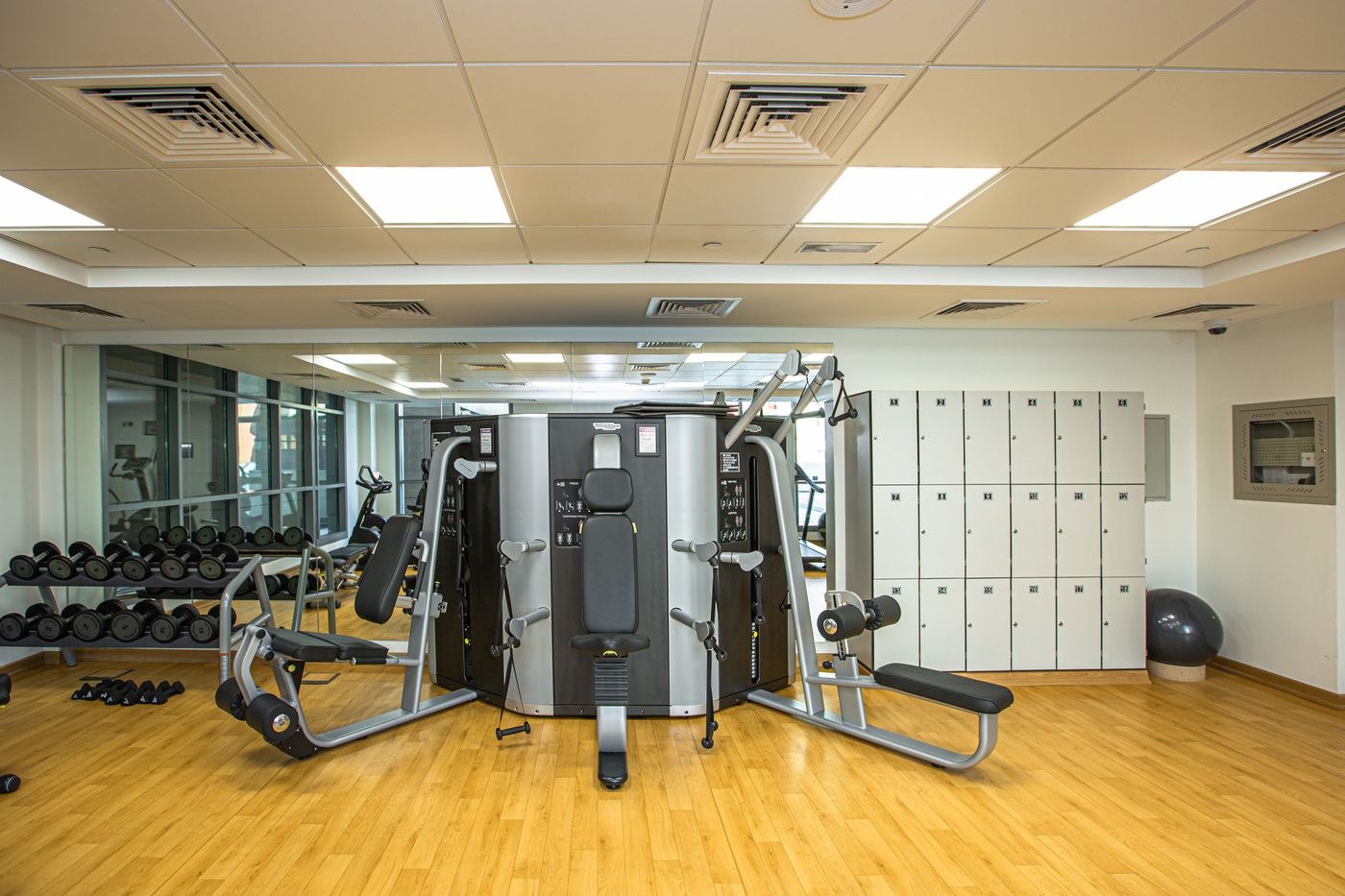
In a studio circuit, a station might contain a mat, a pair of dumbbells or simply a marked space for stepping. The instructor assigns a task to that position. You may stay there for a period of time or complete a stated number of repetitions before moving on. Some classes keep everyone in one place and change the task instead, so listen to the particular arrangement.
Before starting, identify where you go next and which direction the group moves. Put equipment down before crossing to another station. If you miss a demonstration, ask rather than copying a neighbouring participant whose exercise may have been individually adjusted. A station number is an organisational aid, not a difficulty ranking.
Completing a sequence of stations is usually called a round or a circuit. The sequence might mix lower-body work, upper-body work and aerobic movement. It may also repeat similar tasks. A circuit is therefore not automatically a balanced programme; its contents matter more than the label.
For example, a teaching circuit could include chair stands, a wall press and a short walk between marked points. A different circuit might involve challenging loaded exercises. Both use the same organisational format, but they have very different demands. Ask what is included rather than assuming that circuit training always means running or high intensity.
Imagine a class with three stations: a wall press, a low step and a walking lane. The instructor says to spend a short period at each station, take recovery, then move clockwise. Before starting, you still need to know whether the step task alternates legs, whether the walking lane is shared and whether the recovery happens at the current station or between stations. The exercise names alone do not answer those organisational questions.
If you finish a few controlled repetitions before the interval ends, wait in the agreed safe position rather than crossing early through another person's work area. If you need longer recovery, tell the instructor so they can explain how to rejoin. These details are especially important when stations have different equipment or entry routes. A clear briefing should let you predict the next transition without requiring you to copy the person ahead, who may be following a different option or taking a separate rest.
An interval is a defined period, often used to alternate activity and recovery. A timer might announce forty seconds of a task followed by a pause, but the work period is a window in which to exercise, not a command to move continuously. You can stop earlier if control or comfort changes, and you can ask for more recovery.
High-intensity interval training is a particular use of intervals, not a synonym for every timed class. Beginners can encounter intervals at a manageable pace. During a briefing, distinguish the exercise signal, the rest signal and the signal to change stations; studios sometimes use different sounds for each.
If the class becomes confusing, simplify the question: what am I doing now, what tells me to stop, and where do I go next? Confirm those three points with the instructor. Understanding the sequence frees your attention for the movement itself and avoids hurried equipment changes when the next beep sounds.