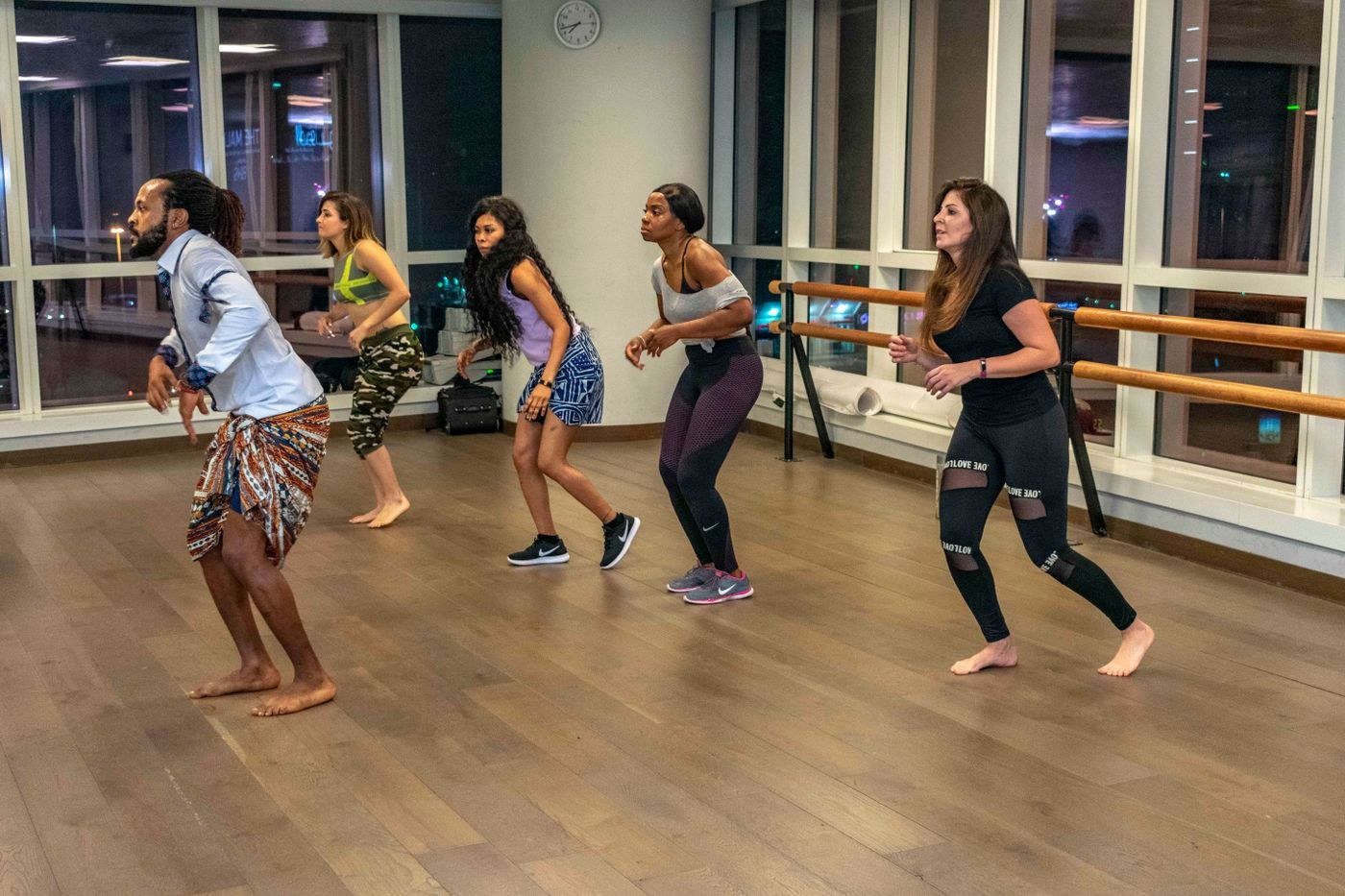
Getting started
Asking for another version of an exercise is easier when you describe the part that is difficult, rather than labelling yourself as bad at the whole movement.
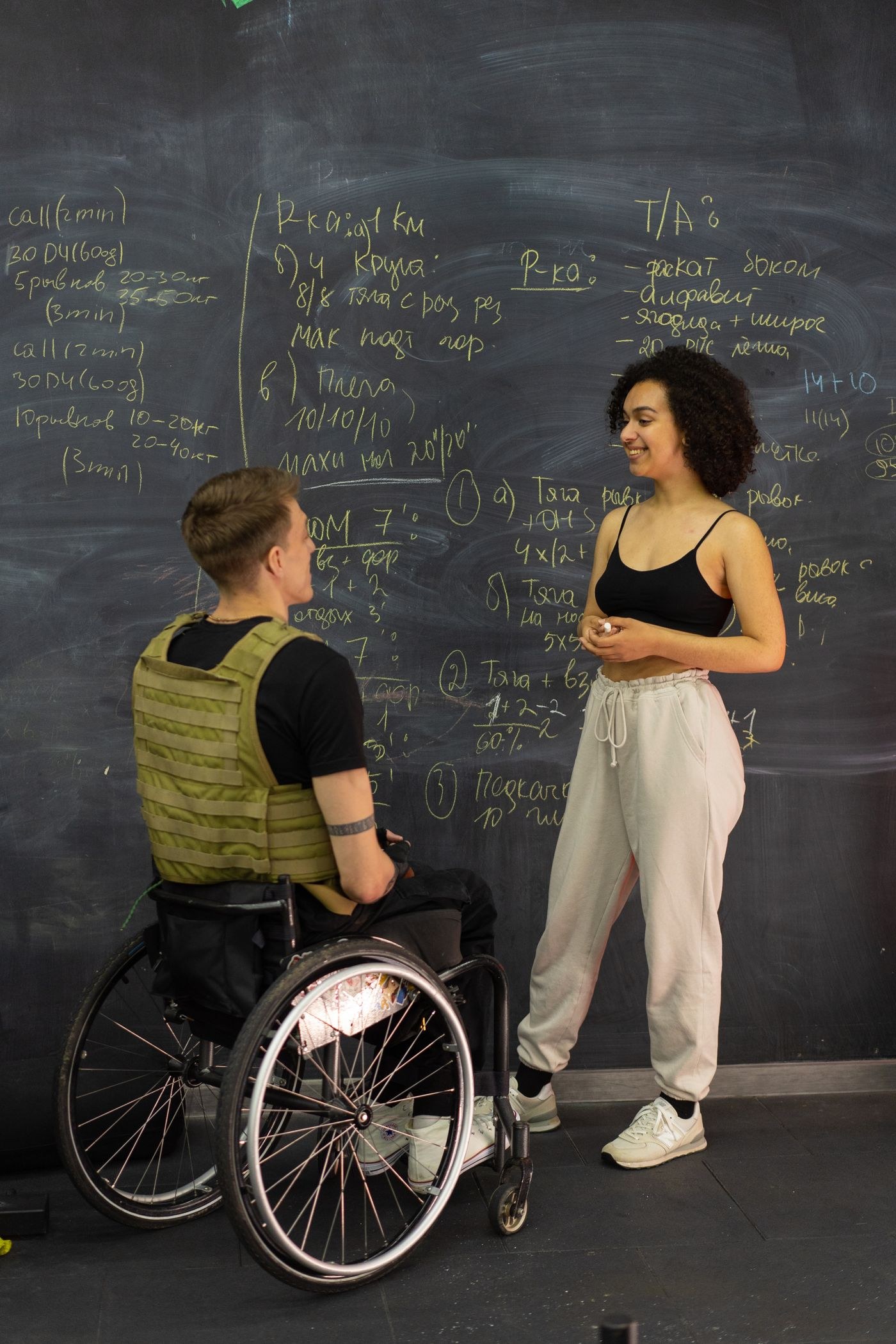
You might say that getting to the floor takes you longer, that the jumping version feels too demanding, or that you cannot follow the movement at the demonstrated speed. These statements give the instructor something specific to change. You do not need anatomical vocabulary or an explanation for every limitation.
Raise predictable needs before the timer starts. A short conversation at the beginning of class allows the coach to show an option and decide where you should stand. If a new issue appears during the session, pause and signal rather than trying to explain while holding a weight or balancing on one leg.
A useful question is whether the new version keeps the same general task. A wall press may replace a floor press-up when a higher support is more manageable, while stepping can replace a jumping pattern in some aerobic sequences. These are examples to discuss, not automatic substitutions for every class or every health concern.
Ask for a demonstration of the beginning and end as well as the main movement. Clarify whether to use the same timer, fewer repetitions or a separate recovery period. An alternative that is technically easier may still become too demanding if performed for the entire original interval without a pause.
Try a small amount while the instructor watches. Tell them what changed: perhaps the setup is clearer, but the support feels unstable, or the range is still uncomfortable. That feedback is more useful than agreeing out of politeness and then struggling through the next round. You can also choose to sit out a task while a suitable option is found.
For example, instead of saying that you cannot do planks, explain that the floor transition is the difficult part and ask whether there is a standing or raised-support task for that station. If the difficulty is wrist discomfort, describe that separately rather than assuming the same alternative will solve it. The coach needs to know which part of the task is creating the problem; a familiar exercise label can conceal several different issues.
Before the next round, repeat the instruction back in your own words and ask the coach to watch one attempt. Confirm where you should stand and how to finish if the alternative still does not suit you. You can say that you would prefer to rest while they help another participant. This keeps the conversation concrete and gives you an agreed plan, rather than leaving you with a hurried suggestion you are unsure how to perform. It also makes the next session easier to discuss because you know which version you tried.
An instructor can explain class technique and offer options within their qualifications. They cannot determine the cause of a new pain from a quick conversation in a noisy studio. If pain or other symptoms are the reason for stopping, do not treat a replacement exercise as a diagnosis or proof that continuing is safe.
For an existing condition, follow the guidance of the healthcare professional involved in your care and share relevant restrictions with the instructor. You need not disclose private details to the whole group. A respectful class should make room for that conversation and for the decision not to perform a particular movement.